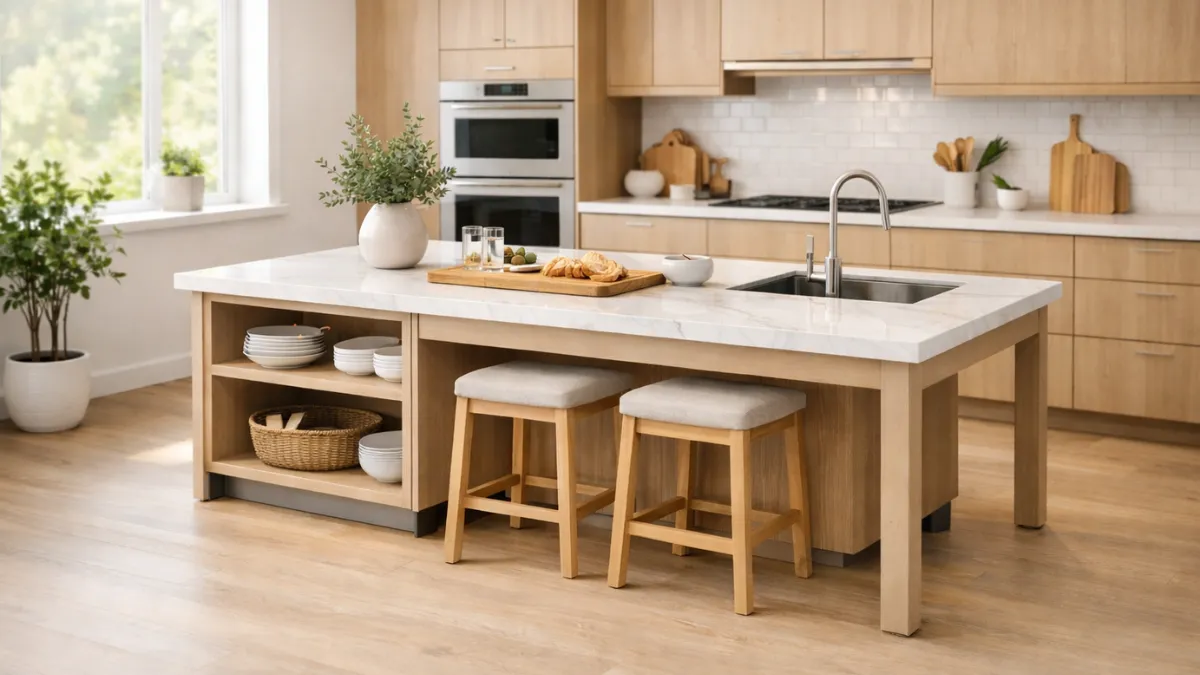
For more than a decade, kitchen islands have been treated as a must-have feature in modern homes. They were seen as a symbol of luxury, openness, and social cooking. However, as we approach 2026, homeowners and designers are rethinking this once-popular layout choice. Daily routines, space limitations, and lifestyle changes are revealing that kitchen islands are not always as practical as they seem. In response, a new and more refined design approach is taking over—one that prioritizes flexibility, elegance, and smarter use of space rather than size alone.
Why Kitchen Islands Are Falling Out of Favor
Kitchen islands work best in large, open kitchens, yet they became common even in smaller homes where they restrict movement. Many homeowners now realize that islands often interrupt workflow, create bottlenecks, and reduce usable floor space. Cleaning around them can be inconvenient, and their fixed nature makes kitchens feel rigid. As living spaces become more multifunctional, people want kitchens that adapt easily instead of forcing daily routines around one oversized structure.
 A quick and natural way to make any room smell fresh, without using sprays or scented candles
The 2026 Replacement: Modular Kitchen Work Zones
The standout replacement for kitchen islands in 2026 is the concept of modular kitchen work zones. Instead of one central block, the kitchen is divided into smaller, purposeful units. These include slim prep tables, movable counters, wall-attached worktops, and compact storage units. Each zone is designed for a specific task, such as food preparation, cooking, or casual dining. This layout allows homeowners to rearrange or adjust the kitchen based on changing needs.
Practical Benefits of Modular Kitchen Layouts
Modular work zones significantly improve kitchen efficiency. With clearer separation between tasks, movement becomes smoother and less crowded. Homeowners can reposition movable units to create more space when needed or bring them closer together during busy cooking times. This flexibility makes everyday cooking easier and more enjoyable, especially for families or shared households. The result is a kitchen that supports real-life use rather than just visual appeal.
 Boiling Rosemary Is the Best Home Tip I Learned From My Grandmother
A Cleaner and More Elegant Look
One of the biggest visual advantages of removing kitchen islands is the sense of openness it creates. Without a bulky centerpiece blocking views, kitchens appear larger, brighter, and calmer. Designers in 2026 are focusing on minimalism with warmth—clean lines, balanced proportions, and subtle textures. Natural materials such as wood, stone, and matte finishes are used to add character without overwhelming the space. The kitchen becomes visually lighter and more refined.
Smarter Storage Without the Bulk
Storage is often the main reason homeowners hesitate to remove kitchen islands. Modern kitchen design addresses this concern with innovative storage solutions. Full-height cabinets maximize vertical space, while pull-out drawers, hidden compartments, and wall-mounted units keep countertops clutter-free. Toe-kick drawers and pantry-style cabinets provide additional storage without taking up valuable floor space. These solutions often offer more storage than traditional islands, but in a far more organized way.
 Scratches on Glass Ceramic Cooktops Can Often Be Removed in Four Simple Steps, Restoring a Smooth and Clean Surface
Supporting Modern Lifestyles and Daily Flexibility
Today’s kitchens are no longer just for cooking. They function as workspaces, social areas, and sometimes even relaxation zones. Modular kitchens support this shift perfectly. A prep table can double as a work desk, while a compact counter can become a breakfast spot or coffee station. When guests arrive, movable units can be adjusted to create more open space. This adaptability makes the kitchen feel more connected to modern living habits.
Is This Trend Suitable for All Homes?
While modular layouts benefit most homes, especially apartments and medium-sized houses, larger homes may still include islands in a reduced or redesigned form. Even in spacious kitchens, designers are breaking large islands into multiple functional zones to improve flow. The focus is no longer on size but on purpose. Every element must add value to how the kitchen is used daily.
 Goodbye Air Fryer: This New Kitchen Gadget Goes Far Beyond Frying, Offering 9 Different Cooking Methods in One Appliance
Tips for Moving Away From a Kitchen Island
Homeowners planning a renovation can start by observing how often their island is truly used. Identifying key tasks and separating them into zones helps create a more efficient layout. Choosing lightweight or movable units is a simple first step toward flexibility. Clear walkways, good lighting, and high-quality materials should always take priority over oversized features. Thoughtful planning leads to long-term comfort and satisfaction.
Conclusion
The shift away from traditional kitchen islands marks an important evolution in home design. The 2026 kitchen is defined by flexibility, practicality, and understated elegance. Modular kitchen work zones allow homeowners to create spaces that adapt to daily life while remaining visually balanced and welcoming. Rather than following outdated trends, modern kitchens are becoming more intentional and people-focused. In the end, the best kitchen is one that works effortlessly for the way you live.
 Goodbye air fryer : this new kitchen gadget goes far beyond frying, offering 9 different cooking methods in one appliance