
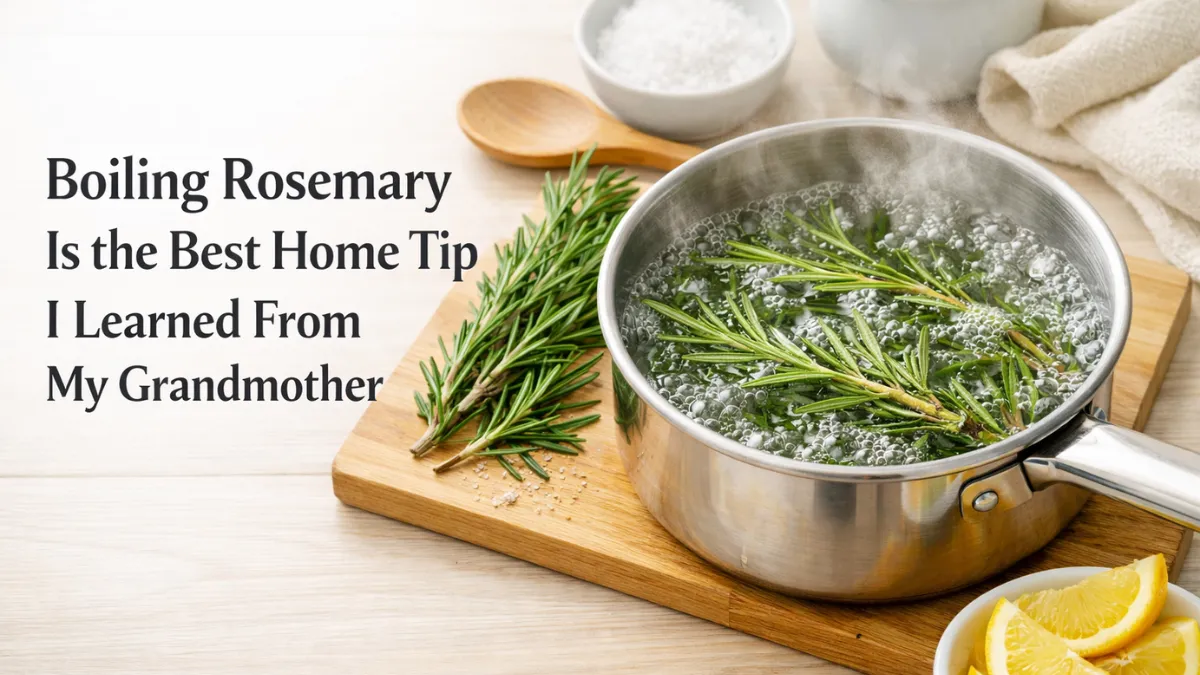
Some of the most effective home tips don’t come from modern trends but from lived wisdom. One such lesson came from my grandmother, who believed that a home should feel as good as it looks. Whenever the house felt heavy, closed, or stale, she would quietly place a pot of water on the stove, add a few sprigs of rosemary, and let it simmer.
Within minutes, the entire home felt different. The air seemed lighter, calmer, and more welcoming. Years later, this simple habit remains one of the most effective and natural ways I know to refresh a living space.


Why rosemary makes such a noticeable difference
Rosemary has a naturally strong yet clean aroma. When boiled, its essential oils are released into the air through steam, gently spreading throughout the home. Unlike artificial air fresheners that can feel sharp or overwhelming, rosemary creates a balanced scent that feels grounded and natural.
The aroma is often associated with cleanliness, focus, and comfort, which is why even a small amount can noticeably change how a room feels. This effect is not dramatic or instant, but subtle and deeply pleasant.

The sensory power of scent in your home
Smell is closely linked to memory and emotion. A fresh, herbal scent can instantly influence how we perceive our surroundings. When rosemary fills the air, it can make a home feel calmer, warmer, and more cared for.
Even if nothing else changes visually, the space feels renewed. This is why boiling rosemary often feels like a reset for the home, especially after cooking, during humid weather, or when windows have been closed for long periods.

A tradition rooted in practical wisdom
Long before commercial fragrances existed, families relied on herbs to maintain a pleasant indoor environment. Boiling herbs was a practical solution, especially in colder seasons. Rosemary was commonly used because it was easy to grow, long-lasting, and effective even in small quantities.
This wasn’t about decoration or luxury; it was about maintaining comfort and cleanliness with simple, reliable methods. Traditions like this survived because they worked, not because they were fashionable.

How boiling rosemary changes the atmosphere
As rosemary simmers, the steam carries its aroma through the room, gently replacing stale air. Lingering odors from cooking, pets, or damp spaces fade naturally. The result is an atmosphere that feels cleaner and more relaxed without feeling artificially scented. The aroma doesn’t cling heavily to fabrics or furniture. Instead, it fades slowly, leaving behind a sense of freshness rather than a lingering perfume.
The correct way to boil rosemary at home
To get the best result, the process should be gentle and unhurried. Start by rinsing two to four fresh rosemary sprigs to remove dust. Place them in a medium pot filled with water. Bring the water to a boil, then reduce the heat and let it simmer for about twenty to thirty minutes.

Keep an eye on the water level and add more if needed. The goal is steady steam, not rapid boiling. You can leave the pot in a central area or carefully move it between rooms.
When this method works best
Boiling rosemary is especially helpful after cooking strong-smelling foods, during rainy or humid weather, or in winter when ventilation is limited. It’s also ideal before guests arrive or during evening routines when you want the home to feel calm and settled. Kitchens, living rooms, and entryways benefit the most, but bedrooms can also feel refreshed once the steam has cooled and settled.
Why this feels better than artificial fragrances
Many commercial air fresheners simply mask odors and can feel overpowering or chemical. Boiled rosemary works differently by gently refreshing the air instead of covering it up. There is no residue, no heavy scent buildup, and no irritation. The aroma feels authentic because it is. This approach fits well with mindful home care, where the goal is comfort rather than intensity.
Turning a home tip into a mindful ritual
Over time, boiling rosemary can become more than a practical habit. It can act as a signal to slow down, clean, or reset your space. The act itself encourages awareness of your environment and a sense of care for your home. That is why this tradition continues to be passed down. It supports both physical comfort and emotional well-being in a quiet, reliable way.
Small mistakes to avoid
To keep the experience pleasant, avoid letting the pot boil dry, using old or flavorless rosemary, or boiling on high heat for too long. Strong heat can make the scent sharp instead of soothing. Subtlety is what makes this method effective, so patience matters.
A timeless habit with lasting value
My grandmother never called this a trick or a hack. It was simply something you did when you wanted your home to feel right. Boiling rosemary doesn’t try to impress or promise unrealistic results. It quietly improves your space in a natural way. In a world full of quick fixes, this gentle tradition reminds us that some of the best solutions are already within reach, waiting to be reused.
FAQ’s
Does boiling rosemary remove bad odors or just cover them?
Boiling rosemary helps refresh stale air naturally, replacing unpleasant smells instead of masking them with heavy artificial fragrance.
Can dried rosemary be used instead of fresh rosemary?
Dried rosemary can be used, but fresh rosemary releases more natural oils and creates a cleaner, more balanced aroma.
How long does the rosemary scent stay in the home?
The scent usually lasts between one and three hours, fading gently without leaving residue on fabrics or surfaces.
Is it safe to boil rosemary every day?
Yes, it is safe when done with proper supervision, enough water in the pot, and normal home ventilation.