
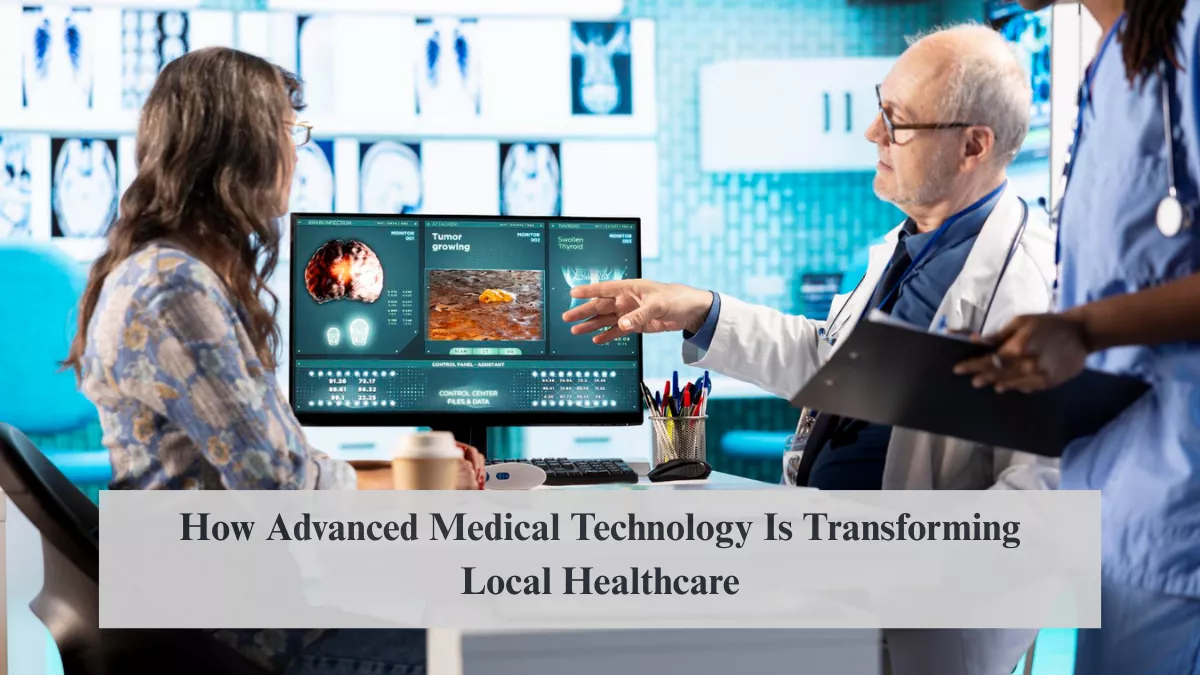
Advanced medical technology is rapidly reshaping local healthcare, bringing high-quality diagnosis, treatment, and patient support closer to home than ever before. What once required long-distance travel to major urban hospitals can now be accessed through community-based medical centers equipped with modern tools and digital systems. These innovations are not only improving clinical accuracy but also enhancing patient comfort, safety, and outcomes.
From faster imaging and minimally invasive procedures to electronic health records and telemedicine, technology has transformed how care is delivered at the local level. Patients benefit from reduced wait times, better communication, and more personalized treatment plans. Healthcare providers gain stronger decision-making support and improved coordination across departments. As technology continues to evolve, local healthcare systems are becoming more efficient, responsive, and accessible. Understanding this transformation highlights how innovation is closing gaps in care and redefining the future of community health services.

The Rise of Digital Infrastructure in Local Healthcare
Digital infrastructure has become the backbone of modern local healthcare systems, enabling more efficient and connected medical services. Electronic health records allow providers to access patient histories instantly, reducing errors and duplication of tests. Secure data sharing improves coordination between departments and specialists, supporting seamless care delivery. Scheduling systems and digital intake tools streamline administrative processes, saving time for both patients and staff. Digital platforms also enhance compliance with safety and privacy standards.
For patients, digital access means easier appointment management and clearer communication. For providers, it supports informed decision-making and continuity of care. As local healthcare facilities invest in robust digital infrastructure, they strengthen reliability and efficiency. This foundation ensures technology-driven improvements reach every aspect of patient care while maintaining trust and accountability.

Advanced Imaging Improving Diagnostic Accuracy
Advanced imaging technology has dramatically improved diagnostic accuracy in local healthcare settings. Tools such as digital X-rays, CT scans, MRI, and ultrasound provide detailed insights into internal conditions. These technologies allow earlier detection of diseases and injuries, leading to timely treatment. Faster imaging reduces patient anxiety and accelerates care decisions.
Local access to advanced diagnostics minimizes the need for referrals to distant facilities. Providers can interpret results quickly and collaborate with specialists when necessary. Improved imaging quality supports precise diagnoses, reducing unnecessary procedures. For patients, this means clarity, confidence, and better outcomes. As imaging technology becomes more accessible locally, communities benefit from higher standards of diagnostic care without long travel burdens or delays.

Minimally Invasive Technology Enhancing Treatment
Minimally invasive medical technology has transformed treatment options available in local healthcare facilities. Procedures that once required extensive surgery can now be performed through small incisions using specialized instruments. This approach reduces pain, scarring, and recovery time for patients. Local hospitals equipped with minimally invasive tools can offer advanced surgical care close to home. Shorter hospital stays and faster recovery improve patient satisfaction and safety.
Providers benefit from enhanced precision and control during procedures. These technologies also reduce complication risks and healthcare costs. As minimally invasive techniques become standard, local healthcare systems expand their capabilities. Patients gain access to advanced treatments while remaining connected to their community support networks.

Telemedicine Expanding Access to Care
Telemedicine has significantly expanded access to healthcare services at the local level. Virtual consultations allow patients to connect with providers without travel barriers. This is especially valuable for individuals with mobility challenges or limited transportation. Telemedicine supports follow-up visits, chronic condition management, and specialist consultations. Local healthcare providers can collaborate remotely with experts, enhancing care quality. Patients experience greater convenience and continuity.
Digital platforms ensure secure communication and documentation. Telemedicine also helps reduce appointment wait times and facility congestion. By integrating virtual care, local healthcare systems become more flexible and responsive. This technology-driven access ensures timely care while maintaining strong patient-provider relationships.

Smart Monitoring and Patient Safety
Smart monitoring technology has improved patient safety in local healthcare environments. Advanced devices track vital signs in real time, alerting staff to changes quickly. Continuous monitoring supports early intervention, reducing complications. Wearable and bedside technologies provide accurate data without disrupting patient comfort. These tools enhance care in emergency, critical, and recovery settings.
Providers can respond proactively rather than reactively. Smart systems also reduce manual errors through automated alerts. For patients, this means increased reassurance and protection. As monitoring technology becomes more common locally, healthcare teams can deliver safer, more attentive care. Patient outcomes improve through timely responses supported by reliable data.
Robotics and Precision in Local Procedures
Robotic-assisted technology has introduced new levels of precision in local medical procedures. These systems enhance surgeon control and accuracy, particularly in complex operations. Smaller incisions and refined movements reduce trauma to surrounding tissues. Local hospitals adopting robotic technology can offer advanced surgical options. Patients benefit from reduced pain and faster recovery.
Robotics also support consistency and repeatability in procedures. Surgeons receive enhanced visualization and stability during operations. This technology elevates local healthcare capabilities to match larger centers. By integrating robotics, community facilities deliver cutting-edge care while maintaining personalized attention and accessibility.
Artificial Intelligence Supporting Clinical Decisions
Artificial intelligence is increasingly supporting clinical decision-making in local healthcare settings. AI-powered tools analyze medical data to identify patterns and risks. These insights assist providers in diagnosis, treatment planning, and preventive care. AI enhances efficiency by prioritizing critical cases and reducing administrative burdens. Predictive analytics help manage chronic conditions and hospital resources.
Providers use AI as a support system, not a replacement for expertise. Patients benefit from more personalized and proactive care. As AI integration grows, local healthcare systems improve accuracy and responsiveness. Technology-driven insights strengthen clinical confidence and patient trust.
Improving Workflow Efficiency Through Automation
Automation technology has streamlined workflows within local healthcare facilities. Automated scheduling, billing, and documentation reduce administrative workload. Staff can focus more on patient care rather than paperwork. Automation minimizes errors and improves consistency across processes. Faster workflows enhance patient experience and reduce wait times.
Local healthcare systems gain operational efficiency and cost savings. Providers benefit from reduced burnout and improved productivity. Automation supports scalability as patient demand grows. By optimizing internal operations, technology strengthens the sustainability of local healthcare services. Efficient systems ensure resources are used effectively to support quality care delivery.
Enhancing Patient Engagement Through Technology
Technology has empowered patients to become active participants in their healthcare. Patient portals provide access to medical records, test results, and care plans. Educational tools support informed decision-making. Digital communication improves transparency and trust. Patients can manage appointments and medications conveniently. Engagement tools encourage adherence to treatment plans.
Local healthcare providers foster stronger relationships through accessible technology. Engaged patients experience better outcomes and satisfaction. Technology bridges communication gaps and promotes shared responsibility. By prioritizing patient engagement, local healthcare systems create collaborative care environments that support long-term wellness.
Technology Bridging Gaps in Rural Healthcare
Advanced medical technology plays a crucial role in bridging healthcare gaps in rural communities. Local facilities equipped with modern tools reduce the need for long-distance travel. Telehealth connects rural patients with specialists. Diagnostic and monitoring technologies support early intervention. Technology ensures equitable access to quality care regardless of location.
Rural healthcare providers can deliver comprehensive services confidently. Communities benefit from improved health outcomes and reduced disparities. Technology investment strengthens rural healthcare infrastructure. By leveraging innovation, local systems overcome geographic challenges and ensure consistent, high-quality medical services for underserved populations.
The Future of Local Healthcare Innovation
The future of local healthcare is deeply connected to continued technological innovation. Emerging tools will further enhance diagnostics, treatment, and patient engagement. Integration of systems will improve coordination and efficiency. Local healthcare providers will adapt to evolving technologies through training and collaboration. Patients will experience more personalized and accessible care.
Innovation will support sustainability and resilience in healthcare delivery. As technology advances, local systems will remain essential pillars of community health. The transformation underway promises a future where quality care is universally accessible, efficient, and patient-centered.
Last Thought
Advanced medical technology is transforming local healthcare by improving access, accuracy, and patient experience. Through innovation, community-based medical systems are delivering high-quality care closer to home. As technology continues to evolve, local healthcare will remain a powerful force in building healthier, more connected communities.
FAQs
How does advanced technology improve local healthcare?
It enhances accuracy, efficiency, and access to medical services.
Is telemedicine reliable for patient care?
Yes, it supports safe and effective virtual consultations.
Do local hospitals use advanced imaging tools?
Many now offer MRI, CT scans, and digital imaging.
Does technology reduce healthcare costs?
It can lower costs through efficiency and early detection.