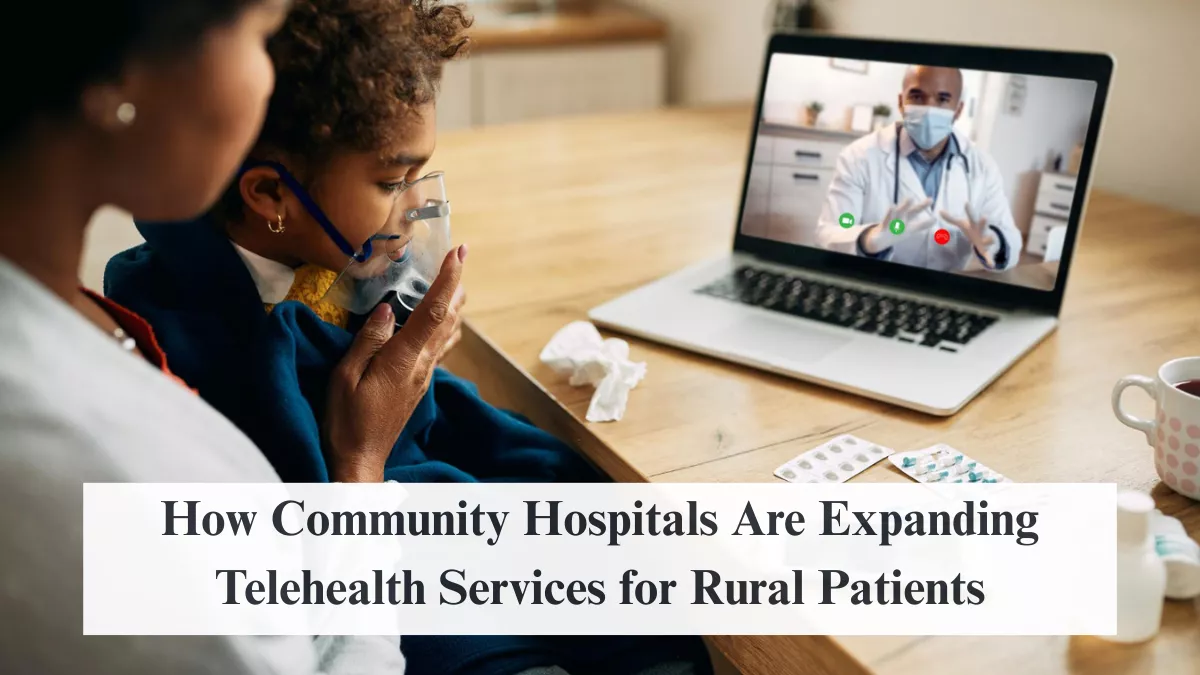
Access to healthcare remains a persistent challenge for rural populations due to geographic isolation, limited transportation, and shortages of medical professionals. Community hospitals are at the forefront of addressing these disparities through the expansion of telehealth services.
Telehealth leverages technology to connect patients with healthcare providers remotely, reducing barriers to care and improving access to timely medical services. By offering virtual consultations, remote monitoring, and digital education, community hospitals are transforming rural healthcare delivery. Expanding telehealth not only improves patient convenience but also promotes better long-term outcomes, reduces hospitalizations, and enhances continuity of care. As technology advances, community hospitals are uniquely positioned to integrate telehealth solutions tailored to the needs of rural communities, fostering equitable healthcare access for underserved populations.
 How Community Hospitals Are Using AI to Improve Diagnostic Accuracy
Understanding Telehealth in Community Hospitals
Telehealth refers to the delivery of healthcare services using digital communication technologies. Services can include video consultations, remote patient monitoring, virtual follow-ups, and digital patient education. Community hospitals are increasingly adopting telehealth to extend their reach beyond physical facilities. By connecting patients with primary care providers, specialists, and allied health professionals remotely, hospitals overcome geographic and logistical barriers.
Telehealth programs in rural areas often integrate electronic health records (EHRs) and secure messaging platforms to maintain continuity of care. By combining technology with traditional healthcare delivery, community hospitals ensure that rural patients receive timely, coordinated, and effective medical attention without unnecessary travel.
 The Role of Local Medical Centers in Promoting Heart Health Awareness
Addressing Physician Shortages in Rural Areas
One of the primary challenges rural communities face is the shortage of physicians and specialists. Telehealth helps bridge this gap by connecting patients to distant providers. Through virtual consultations, rural patients gain access to specialists in cardiology, endocrinology, mental health, and other fields.
Community hospitals serve as hubs for telehealth coordination, ensuring that patients receive accurate diagnoses and treatment plans. By leveraging technology, hospitals extend the reach of limited medical personnel, enabling timely interventions that reduce complications and improve overall health outcomes. Telehealth helps mitigate workforce shortages while maintaining quality standards in rural healthcare.
 How Mobile Clinics Are Expanding Healthcare Access in Underserved Areas
Reducing Travel Burden for Patients
Travel distance is a significant barrier to accessing healthcare in rural areas. Patients often face hours of travel for routine visits, follow-ups, or specialist consultations. Telehealth eliminates the need for frequent travel by providing virtual appointments directly to patients’ homes or local clinics.
Reducing travel saves time, lowers transportation costs, and decreases the physical strain on patients, particularly the elderly or those with chronic conditions. By minimizing logistical barriers, community hospitals encourage greater adherence to care plans and improve patient satisfaction. Telehealth ensures that access to quality healthcare does not depend on proximity to urban medical centers.
 Why Hospital-Based Exercise Programs Improve Patient Recovery Rates
Improving Chronic Disease Management
Chronic diseases such as diabetes, heart disease, and COPD are prevalent in rural communities. Telehealth programs support ongoing monitoring and management of these conditions. Remote patient monitoring devices track vital signs, blood sugar, weight, and other health metrics. Data is transmitted to healthcare providers for review, enabling early detection of complications and timely interventions.
Community hospitals use telehealth to educate patients on lifestyle modifications, medication adherence, and symptom recognition. Continuous monitoring improves disease control, reduces emergency visits, and enhances quality of life. Telehealth empowers rural patients to manage chronic conditions effectively with professional guidance.
 How Community Hospitals Are Supporting Nutrition and Lifestyle Education
Enhancing Mental Health Services
Mental health care is often limited in rural areas due to stigma, lack of specialists, and transportation barriers. Telepsychiatry and virtual counseling services provide access to licensed mental health professionals. Community hospitals facilitate confidential video sessions, medication management, and therapeutic interventions.
Telehealth also offers crisis support and follow-up care for patients with depression, anxiety, or substance use disorders. By integrating mental health services into telehealth programs, hospitals address an essential aspect of holistic care, improving both emotional well-being and overall health outcomes for rural populations.
Expanding Access to Specialty Care
Specialty care is frequently concentrated in urban centers, making it difficult for rural patients to obtain timely consultations. Community hospitals use telehealth to connect patients with specialists for cardiology, dermatology, neurology, and other disciplines.
Virtual consultations allow physicians to review test results, images, and patient history remotely, providing recommendations without requiring travel. Telehealth also enables multidisciplinary collaboration, allowing rural patients to benefit from expert input from multiple specialists simultaneously. Expanding access to specialty care ensures that rural patients receive comprehensive, high-quality treatment that was previously unavailable locally.
Supporting Post-Discharge Care and Follow-Up
Effective post-discharge care is critical for preventing readmissions and complications. Telehealth allows community hospitals to monitor patients after hospitalization, conduct virtual follow-up visits, and review medication adherence. Remote check-ins help identify early warning signs of deterioration and address patient concerns promptly.
This continuous support reduces unnecessary readmissions, lowers healthcare costs, and promotes faster recovery. By leveraging telehealth for follow-up care, hospitals maintain continuity of care and ensure that rural patients remain supported throughout their recovery journey.
Integrating Remote Patient Monitoring Technologies
Remote patient monitoring (RPM) is a key component of telehealth programs in community hospitals. RPM devices collect data on blood pressure, heart rate, oxygen saturation, glucose levels, and weight. Patients transmit this information securely to healthcare teams for ongoing assessment. RPM allows clinicians to detect changes early, adjust treatment plans, and intervene proactively. By integrating RPM into telehealth programs, community hospitals enhance patient safety, reduce emergency visits, and improve long-term outcomes. Monitoring technologies also empower patients to engage in their care by tracking their own health metrics.
Facilitating Health Education and Engagement
Patient education is essential for promoting healthy behaviors and self-management. Telehealth programs provide virtual workshops, educational webinars, and interactive resources for rural patients. Hospitals use digital platforms to teach disease prevention, medication management, nutrition, and exercise guidance. Educated patients are more likely to adhere to treatment plans, recognize warning signs, and engage actively in their care. Community hospitals leverage telehealth to deliver personalized health education, fostering long-term wellness and reducing preventable complications in rural populations.
Improving Emergency Response and Triage
Telehealth supports rural hospitals in emergency situations by providing remote triage and consultation. Clinicians can assess patients virtually, determine urgency, and provide guidance before transportation or hospital admission. This reduces delays in care and ensures that limited emergency resources are used efficiently. Tele-emergency services allow rural hospitals to connect with larger medical centers, enhancing decision-making and patient safety. Early intervention via telehealth improves outcomes and reduces the risk of complications in time-sensitive conditions.
Addressing Barriers to Telehealth Adoption
While telehealth offers significant benefits, community hospitals face challenges in implementation. Limited broadband access, technological literacy, and affordability can hinder adoption in rural areas. Hospitals address these barriers by offering technical support, training, and community outreach programs. Partnerships with local internet providers and government initiatives help expand connectivity. Simplified user interfaces and patient education increase comfort with telehealth tools. Overcoming adoption barriers ensures that rural patients can fully benefit from expanded telehealth services.
Ensuring Privacy and Security in Digital Care
Patient confidentiality and data security are paramount in telehealth. Community hospitals implement secure platforms, encrypted communication, and compliance with healthcare privacy regulations. Staff are trained in cybersecurity protocols to protect sensitive patient information. Hospitals educate patients on secure usage and consent procedures. Protecting privacy builds trust, encourages utilization, and ensures compliance with legal and ethical standards. Security measures are essential for sustainable telehealth programs.
Collaborating With Primary Care Providers
Telehealth programs are most effective when integrated with local primary care services. Community hospitals coordinate with rural clinics, nurse practitioners, and family physicians to ensure continuity of care. Providers share patient information, treatment plans, and follow-up strategies through digital platforms. Collaborative care ensures that telehealth complements in-person services rather than replacing them. By strengthening the local healthcare network, community hospitals enhance patient outcomes and system efficiency.
Reducing Healthcare Costs for Rural Patients
Travel, missed work, and frequent hospital visits contribute to high healthcare costs for rural patients. Telehealth reduces these expenses by minimizing unnecessary travel and hospital utilization. Early detection and continuous monitoring prevent costly complications and readmissions. By providing affordable access to care, community hospitals make healthcare more equitable and sustainable. Cost reduction through telehealth benefits both patients and healthcare systems, increasing accessibility and satisfaction.
Enhancing Patient Satisfaction and Engagement
Telehealth improves patient experience by offering convenience, timely access, and personalized care. Patients appreciate reduced travel, faster consultations, and continuous support. Hospitals monitor satisfaction metrics to refine services and ensure responsiveness. Engaged patients are more likely to adhere to care plans and participate in preventive care. High satisfaction fosters trust, strengthens the patient-provider relationship, and promotes long-term engagement in healthcare.
Training Staff for Effective Telehealth Delivery
Effective telehealth delivery requires trained staff proficient in technology, communication, and digital patient management. Community hospitals provide training programs to ensure clinicians are comfortable conducting virtual consultations and monitoring patient data. Staff learn strategies to maintain empathy, assess patient conditions remotely, and use technology effectively. Skilled telehealth providers enhance quality, safety, and patient experience, ensuring that virtual care complements traditional in-person services.
Evaluating Telehealth Outcomes
Community hospitals measure telehealth success through clinical outcomes, patient satisfaction, cost savings, and access metrics. Data analysis helps refine programs, identify gaps, and prioritize improvements. Regular evaluation ensures telehealth services remain effective, sustainable, and responsive to patient needs. Outcome measurement demonstrates accountability, supports funding initiatives, and validates the impact of telehealth on rural healthcare delivery.
Innovating for Future Telehealth Expansion
Future telehealth expansion includes integrating artificial intelligence, predictive analytics, and mobile health platforms. AI can assist with triage, symptom assessment, and risk stratification. Predictive analytics identify patients at higher risk for complications. Mobile health apps provide education, reminders, and engagement tools. Community hospitals continuously explore innovations to expand reach, improve outcomes, and optimize resource utilization. Future advancements promise more personalized, efficient, and accessible care for rural populations.
Integrating Telehealth With Population Health Initiatives
Telehealth supports broader population health goals by addressing disparities, promoting preventive care, and managing chronic conditions. Community hospitals use telehealth to track trends, identify high-risk groups, and implement targeted interventions. Digital health platforms allow for remote outreach, education, and monitoring at scale. Integration with population health programs improves efficiency, outcomes, and health equity, benefiting entire rural communities.
Conclusion
Community hospitals are transforming rural healthcare through the expansion of telehealth services. By improving access to primary and specialty care, supporting chronic disease management, enhancing mental health services, and reducing travel burdens, telehealth addresses critical barriers for rural patients. Integration with local providers, technology adoption, patient education, and continuous evaluation ensures that telehealth programs deliver measurable benefits.
As hospitals innovate and expand these services, rural communities experience improved access, better long-term outcomes, and enhanced overall health. Telehealth exemplifies how community hospitals leverage technology and collaboration to bridge healthcare gaps, ensuring that rural patients receive high-quality, patient-centered care regardless of location.