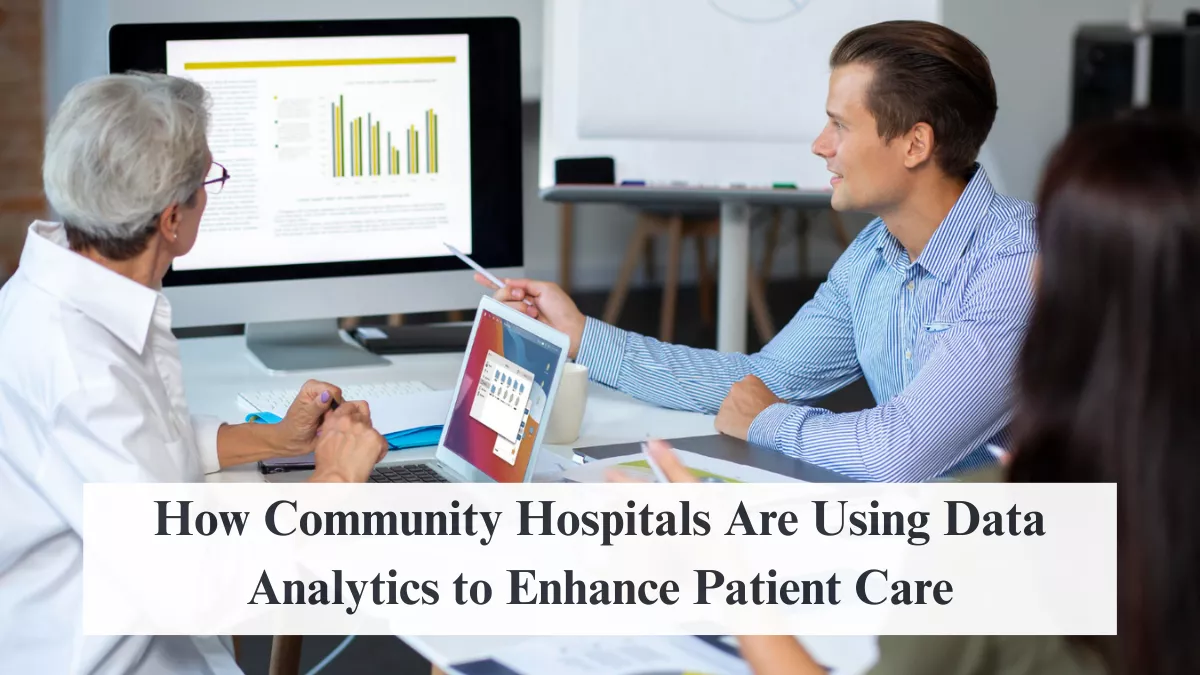
The integration of data analytics into healthcare has revolutionized patient care, enabling hospitals to deliver more precise, proactive, and efficient services. Community hospitals, which serve as the backbone of regional healthcare systems, are increasingly leveraging data analytics to improve clinical decision-making, optimize operational efficiency, and enhance patient outcomes. By analyzing electronic health records (EHRs), patient demographics, treatment histories, and real-time monitoring data, community hospitals can identify trends, predict risks, and implement targeted interventions.
Data analytics supports preventive care, chronic disease management, resource allocation, and quality improvement initiatives. It enables healthcare providers to move from reactive care to proactive, evidence-based strategies. In an era of rising healthcare demands, limited resources, and complex patient needs, data-driven approaches empower community hospitals to deliver high-quality, patient-centered care.
 How Community Hospitals Are Using AI to Improve Diagnostic Accuracy
Understanding Data Analytics in Healthcare
Data analytics refers to the systematic examination of raw data to extract meaningful insights that inform decision-making. In healthcare, analytics includes descriptive, predictive, and prescriptive methods. Descriptive analytics summarizes past events, such as patient admissions, treatment outcomes, and infection rates. Predictive analytics identifies patterns and forecasts potential risks, including hospital readmissions or disease progression. Prescriptive analytics recommends actionable strategies to optimize care delivery.
Community hospitals utilize these analytical techniques to enhance patient safety, streamline operations, and improve outcomes. By combining clinical data, operational metrics, and patient-reported outcomes, analytics allows hospitals to implement strategies that are both effective and resource-efficient.
 The Role of Local Medical Centers in Promoting Heart Health Awareness
Improving Patient Outcomes Through Predictive Analytics
Predictive analytics uses historical and real-time data to forecast potential health risks for individual patients and patient populations. Community hospitals analyze factors such as age, comorbidities, lab results, and social determinants of health to identify patients at high risk of complications, readmissions, or adverse events.
For example, predictive models can flag patients likely to experience heart failure exacerbations, enabling timely interventions. By proactively addressing risks, hospitals reduce preventable complications, lower hospital readmissions, and improve long-term health outcomes. Predictive analytics allows clinicians to tailor care plans to individual patients, enhancing treatment effectiveness and overall patient safety.
 How Mobile Clinics Are Expanding Healthcare Access in Underserved Areas
Optimizing Resource Allocation
Community hospitals often operate under tight budget constraints, making efficient resource allocation critical. Data analytics helps hospitals identify trends in patient volume, peak admission times, and departmental workload. This information informs staffing schedules, equipment utilization, and supply management.
Predictive models can forecast patient demand, allowing hospitals to allocate resources proactively and reduce bottlenecks. Analytics also supports cost containment by identifying high-cost procedures, optimizing medication use, and minimizing unnecessary tests. Efficient resource management enhances patient care quality, reduces delays, and ensures that hospital operations remain sustainable while meeting community healthcare needs.
 Why Hospital-Based Exercise Programs Improve Patient Recovery Rates
Enhancing Chronic Disease Management
Chronic diseases such as diabetes, hypertension, and chronic obstructive pulmonary disease (COPD) require continuous monitoring and personalized management strategies. Community hospitals use data analytics to track disease progression, monitor treatment adherence, and identify patients who may require intervention.
Analytical tools can detect subtle changes in lab values, vital signs, or medication adherence, prompting clinicians to adjust care plans promptly. Population-level analytics helps identify trends, risk factors, and gaps in care, allowing hospitals to design targeted interventions and educational programs. By integrating data analytics into chronic disease management, community hospitals improve patient outcomes, prevent complications, and promote long-term wellness.
 How Community Hospitals Are Supporting Nutrition and Lifestyle Education
Improving Readmission Rates
Hospital readmissions are costly and often preventable with timely intervention and follow-up care. Data analytics enables community hospitals to identify patients at risk for readmission by analyzing previous admissions, comorbidities, discharge summaries, and social factors.
Early identification allows care teams to provide targeted interventions, such as follow-up appointments, remote monitoring, medication reconciliation, and patient education. Hospitals can also track the effectiveness of post-discharge programs and continuously refine strategies. Reducing readmissions not only improves patient outcomes but also minimizes financial penalties associated with high readmission rates, promoting both clinical and operational efficiency.
Supporting Preventive Care Initiatives
Preventive care is essential for reducing the burden of chronic and acute illnesses. Data analytics enables community hospitals to identify patients who are due for screenings, vaccinations, or routine check-ups. By analyzing population-level data, hospitals can design outreach programs, health education initiatives, and mobile clinic services to target at-risk groups. Predictive models help identify patients with lifestyle-related risk factors, allowing proactive counseling and preventive interventions.
Analytics-driven preventive care improves early detection, reduces hospitalizations, and fosters healthier communities. Community hospitals leverage these insights to create personalized preventive care strategies tailored to the specific needs of their patient population.
Integrating Electronic Health Records (EHRs)
EHRs are a fundamental source of healthcare data that community hospitals use for analytics. EHR systems capture comprehensive patient information, including medical history, medications, lab results, imaging studies, and treatment plans.
By analyzing this data, hospitals identify trends, track clinical outcomes, and improve care coordination. EHR-integrated analytics supports decision-making at both the patient and population levels, enabling personalized care while optimizing hospital operations. Advanced EHR platforms also allow real-time data access for clinicians, ensuring that patient care decisions are based on the most current information.
Enhancing Patient Engagement and Education
Data analytics improves patient engagement by identifying individuals who may benefit from targeted education and communication. Hospitals can analyze patient behaviors, adherence patterns, and health literacy levels to design personalized educational materials. Automated reminders for appointments, screenings, and medication schedules enhance adherence and promote proactive self-management.
By engaging patients through tailored interventions, community hospitals foster a sense of ownership over health outcomes. Improved patient engagement reduces complications, prevents disease progression, and contributes to overall satisfaction with care.
Identifying Patterns in Population Health
Community hospitals use data analytics to monitor population health trends and identify emerging health issues. Analysis of local demographics, chronic disease prevalence, lifestyle factors, and social determinants helps hospitals allocate resources effectively and plan community health initiatives.
By understanding patterns such as increasing rates of diabetes or hypertension, hospitals can implement targeted prevention and education campaigns. Population health analytics supports evidence-based policy decisions and ensures that preventive care strategies address the specific needs of the community.
Optimizing Emergency Department (ED) Operations
Emergency departments often face high patient volumes, long wait times, and resource constraints. Data analytics helps community hospitals manage ED operations by forecasting patient flow, identifying peak hours, and allocating staff and resources accordingly. Predictive models can triage patients based on severity and risk, ensuring timely care for critical cases. Analytics also identifies bottlenecks and inefficiencies, allowing hospitals to implement process improvements that reduce wait times and enhance patient experience. Efficient ED management improves outcomes, patient satisfaction, and overall hospital performance.
Monitoring Quality Metrics and Outcomes
Data analytics allows community hospitals to continuously monitor quality metrics, including infection rates, readmission rates, treatment adherence, and patient satisfaction. By tracking these indicators, hospitals identify areas for improvement, implement corrective measures, and measure the effectiveness of interventions. Quality monitoring ensures compliance with regulatory standards, enhances patient safety, and drives evidence-based clinical practices. Continuous improvement based on data insights strengthens the overall performance of the hospital and contributes to better health outcomes for patients.
Supporting Telehealth and Remote Monitoring
Telehealth services and remote patient monitoring generate significant amounts of data that hospitals can analyze to enhance care. Vital signs, glucose readings, blood pressure measurements, and other patient-generated health data inform clinicians about ongoing conditions. Data analytics helps identify trends, detect early warning signs, and optimize care plans remotely. By combining telehealth with predictive analytics, community hospitals can proactively intervene before complications arise, improving patient outcomes while reducing hospital admissions and emergency visits.
Streamlining Hospital Operations
Beyond clinical applications, data analytics supports operational efficiency in community hospitals. By analyzing patient flow, staff productivity, supply utilization, and billing patterns, hospitals optimize internal processes. Efficient operations reduce delays, enhance patient experience, and improve resource allocation. Analytics-driven operational decisions also lower costs and increase capacity, enabling hospitals to serve more patients without compromising quality. Streamlined hospital operations contribute indirectly to better clinical outcomes by ensuring timely and effective delivery of care.
Reducing Medication Errors and Enhancing Safety
Data analytics improves medication safety by tracking prescriptions, patient history, and potential drug interactions. Predictive models flag high-risk patients or medication combinations that may result in adverse events. Hospitals can implement automated alerts, decision-support tools, and monitoring protocols to prevent errors. By leveraging analytics for medication safety, community hospitals reduce adverse events, improve treatment effectiveness, and enhance overall patient safety.
Enhancing Clinical Research and Innovation
Community hospitals use data analytics to support clinical research and innovation. Large datasets allow researchers to study treatment outcomes, identify trends, and evaluate new therapies. Analytics facilitates evidence-based practice, supports clinical trials, and informs hospital policies. By integrating research insights into patient care, hospitals improve treatment protocols, adopt best practices, and advance healthcare quality. Data-driven innovation ensures that patient care continually evolves and improves based on scientific evidence.
Facilitating Care Coordination Across Departments
Effective patient care requires seamless coordination across multiple departments. Data analytics enables hospitals to track patient progress, share information between specialists, and monitor adherence to treatment plans. Care coordination is especially important for patients with complex or chronic conditions, as it ensures continuity and reduces the risk of errors or duplicated services. Analytics supports multidisciplinary collaboration, improving patient outcomes and satisfaction.
Addressing Health Disparities
Data analytics helps community hospitals identify and address disparities in healthcare access and outcomes. By analyzing demographics, socioeconomic factors, and geographic data, hospitals can pinpoint underserved populations and implement targeted interventions. Programs addressing social determinants of health, preventive care, and chronic disease management reduce inequities and improve outcomes. Analytics ensures that all patients, regardless of background, receive equitable, high-quality care.
Leveraging Artificial Intelligence (AI) and Machine Learning
Artificial intelligence and machine learning are increasingly integrated into hospital analytics. AI algorithms can predict patient deterioration, recommend treatment plans, and identify patterns that may not be immediately visible to clinicians. Machine learning models improve over time as they process more data, enhancing predictive accuracy. By leveraging AI, community hospitals optimize care delivery, reduce errors, and improve treatment outcomes, particularly for complex or high-risk patients.
Enhancing Patient Satisfaction and Experience
Analytics-driven insights help hospitals tailor services to improve patient experience. Monitoring satisfaction scores, appointment adherence, wait times, and feedback allows hospitals to implement targeted improvements. Data-driven adjustments in scheduling, communication, and service delivery enhance convenience, reduce frustration, and strengthen patient trust. A positive patient experience is associated with better adherence to care plans and improved clinical outcomes.
Supporting Public Health Initiatives
Community hospitals contribute to broader public health efforts through data analytics. Analysis of trends in infectious diseases, chronic conditions, and health behaviors informs community health campaigns and preventive programs. Hospitals can track vaccination coverage, implement outreach programs, and target interventions to high-risk populations. Analytics ensures that public health initiatives are evidence-based, efficient, and effective in improving population health outcomes.
Training Staff for Data-Driven Care
Successful use of analytics requires staff training in data interpretation, clinical application, and decision-making. Community hospitals invest in professional development programs that teach clinicians, administrators, and support staff to leverage analytics effectively. Skilled personnel ensure that insights are translated into actionable strategies, improving patient care quality and hospital performance.
Ensuring Data Security and Compliance
Healthcare data is sensitive and requires strict privacy protections. Community hospitals implement secure systems, encryption protocols, and compliance with regulations such as HIPAA. Ensuring data integrity and security builds patient trust, protects confidentiality, and supports the safe use of analytics in clinical and operational decision-making.
Conclusion
Community hospitals are transforming patient care through the strategic use of data analytics. From predictive modeling and chronic disease management to operational efficiency, preventive care, and patient engagement, analytics enhances every aspect of healthcare delivery.
By leveraging EHRs, telehealth data, AI, and population health insights, hospitals make informed, evidence-based decisions that improve outcomes, reduce costs, and enhance the patient experience. Analytics-driven care allows community hospitals to proactively address health risks, optimize resources, and promote equity, ultimately elevating the standard of healthcare within the communities they serve. In an era of increasing healthcare complexity, data analytics is essential for delivering high-quality, patient-centered, and sustainable care.