
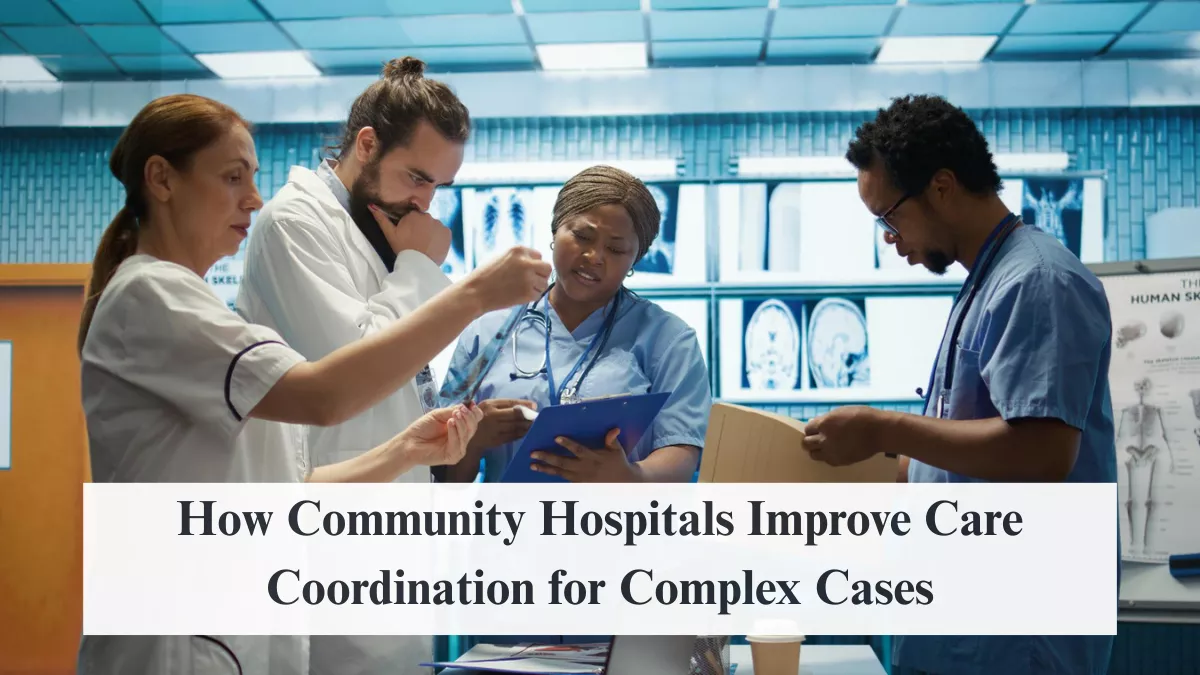
Community hospitals play a vital role in managing complex medical cases by serving as accessible, patient-centered hubs within local healthcare ecosystems. Unlike large tertiary centers that often feel distant and fragmented, community hospitals focus on continuity, communication, and coordination, which are essential when patients face multiple conditions requiring diverse treatments.
Effective care coordination ensures that specialists, primary providers, nurses, therapists, and support services work from a unified plan, reducing errors and improving outcomes. For patients with chronic illnesses, neurological disorders, cancer, or multi-system diseases, coordinated care prevents duplication of tests, medication conflicts, and delayed interventions. Community hospitals are uniquely positioned to build strong relationships with patients, families, and local providers, enabling faster information sharing and personalized decision-making.


By integrating technology, interdisciplinary teamwork, and community partnerships, these hospitals bridge gaps across the care continuum. This article explores how community hospitals strengthen care coordination for complex cases, highlighting strategies, benefits, and patient-centered approaches that improve both clinical results and overall healthcare experiences.
Integrated Care Teams as the Foundation
Community hospitals improve care coordination by building integrated care teams that collaborate closely around complex patients. These teams typically include primary care physicians, specialists, nurses, case managers, pharmacists, and social workers who meet regularly to align treatment goals. By sharing insights and responsibilities, they reduce miscommunication and ensure every aspect of a patient’s condition is addressed.

This collaborative model allows community hospitals to respond quickly to changes in patient status, adjusting care plans without bureaucratic delays. Because team members often work in the same facility, informal communication supplements formal documentation, enhancing clarity. Integrated teams also foster accountability, as each provider understands their role within the larger plan. This structure supports holistic treatment, addressing medical, emotional, and social needs simultaneously, which is especially important for patients with overlapping diagnoses or long-term care requirements.
Centralized Care Coordination Roles
Dedicated care coordinators are a cornerstone of how community hospitals manage complex cases effectively. These professionals act as the primary point of contact, guiding patients through appointments, treatments, and follow-ups. By centralizing coordination responsibilities, hospitals prevent fragmented care and ensure critical information flows smoothly between providers.

Care coordinators also help patients understand their treatment plans, medication schedules, and warning signs that require attention. This personalized guidance reduces confusion and empowers patients to participate actively in their care. For complex cases involving multiple specialists or post-discharge services, coordinators track progress and address gaps promptly. Their oversight minimizes missed appointments, redundant tests, and conflicting instructions, ultimately improving safety and efficiency while easing the emotional burden on patients and families navigating complicated healthcare journeys.
Use of Shared Electronic Health Records
Community hospitals rely heavily on shared electronic health records to enhance care coordination for complex patients. A unified digital record allows every authorized provider to access real-time information, including diagnoses, test results, medications, and care plans. This transparency reduces errors caused by incomplete data or delayed communication.

When specialists, primary care providers, and emergency teams view the same updated record, decisions are more consistent and informed. Community hospitals often integrate EHR systems with local clinics and rehabilitation centers, extending coordination beyond hospital walls. This connectivity ensures continuity during transitions, such as discharge or referral. By streamlining documentation and information exchange, shared electronic records support faster interventions, reduce duplication, and create a cohesive narrative of the patient’s health journey, which is essential for managing multifaceted medical conditions.
Streamlined Communication Across Departments
Effective communication across departments is critical for coordinating complex care, and community hospitals excel by maintaining streamlined internal channels. Smaller organizational structures allow departments to collaborate without excessive hierarchy, enabling faster problem-solving and decision-making.

Regular interdisciplinary meetings, shared messaging platforms, and clear escalation pathways ensure that concerns are addressed promptly. When a patient’s condition changes, information reaches the right providers quickly, preventing delays in treatment. This agility is particularly valuable in complex cases where timing and coordination directly impact outcomes. Community hospitals also encourage a culture of openness, where staff feel comfortable sharing insights or questioning plans. Such communication reduces silos, aligns priorities, and supports cohesive care delivery that adapts efficiently to evolving patient needs.
Strong Relationships With Local Providers
Community hospitals often maintain close relationships with local physicians, clinics, and specialists, which enhances coordination for complex cases. These established connections foster trust and familiarity, making referrals smoother and communication more effective.
When community hospitals collaborate with external providers, they can align treatment plans and share updates without friction. This is especially important for patients who receive ongoing care outside the hospital setting. Local partnerships also support timely access to specialized services while keeping care anchored within the community. By coordinating with home health agencies, rehabilitation centers, and primary care practices, community hospitals ensure continuity across settings. These relationships reduce fragmentation and help patients experience a seamless care journey, even when multiple organizations are involved.
Personalized Care Planning for Complex Needs
Personalized care planning is a key strength of community hospitals managing complex cases. Rather than applying standardized protocols alone, teams tailor plans based on individual medical histories, lifestyle factors, and personal goals. This approach recognizes that complex patients often require nuanced strategies.
Community hospitals involve patients and families in care planning discussions, ensuring preferences and concerns are addressed. This collaboration improves adherence and satisfaction while aligning medical decisions with real-world circumstances. Personalized plans also account for social determinants of health, such as transportation or caregiver support, which influence outcomes. By continuously revisiting and adjusting plans, community hospitals maintain flexibility. This individualized focus enhances coordination, as every provider works toward shared, patient-specific objectives rather than isolated clinical targets.
Effective Transition of Care Processes
Transitions between care settings pose significant risks for complex patients, and community hospitals prioritize structured transition processes. From admission to discharge, teams plan ahead to ensure continuity and clarity.
Discharge planning begins early, involving care coordinators, nurses, and social workers who assess post-hospital needs. Clear instructions, medication reconciliation, and scheduled follow-up appointments reduce the likelihood of complications. Community hospitals often communicate directly with primary care providers and home health services to confirm readiness. This proactive approach minimizes readmissions and confusion. By managing transitions carefully, community hospitals maintain momentum in treatment plans, ensuring that complex care continues smoothly beyond the hospital environment.
Patient and Family Engagement Strategies
Engaging patients and families is essential for coordinating complex care, and community hospitals emphasize education and communication. By explaining conditions, treatments, and expectations clearly, hospitals empower patients to make informed decisions.
Family members are often included in discussions, especially when patients require long-term support. This inclusion ensures caregivers understand care plans and warning signs. Community hospitals use teach-back methods and accessible language to confirm understanding. Engagement builds trust and encourages adherence, reducing errors caused by misunderstanding. When patients and families feel involved, they are more likely to communicate concerns early. This partnership strengthens coordination by aligning clinical efforts with patient behavior and support systems.
Coordination With Community Support Services
Complex cases often involve needs beyond clinical treatment, and community hospitals coordinate closely with community support services. These may include mental health resources, social services, nutrition programs, and transportation assistance.
By connecting patients with appropriate resources, hospitals address factors that influence recovery and stability. Care coordinators often act as liaisons, ensuring services align with medical plans. This integration reduces barriers that could undermine treatment, such as lack of access to medications or follow-up care. Community hospitals understand local resources well, enabling targeted referrals. Coordinating medical and social support creates a comprehensive approach that improves outcomes and quality of life for patients managing multifaceted conditions.
Continuous Monitoring and Follow-Up
Ongoing monitoring is crucial for complex cases, and community hospitals implement structured follow-up systems. After discharge or treatment changes, teams check in to assess progress and identify issues early.
This continuous oversight may include phone calls, telehealth visits, or coordination with primary care providers. By tracking symptoms, adherence, and test results, hospitals can intervene before complications escalate. Community hospitals often leverage remote monitoring tools to extend care into patients’ homes. Regular follow-up reinforces accountability among providers and reassures patients. This sustained engagement ensures that care plans remain effective over time, reducing emergencies and maintaining stability for individuals with complex health needs.
Quality Improvement Through Data and Feedback
Community hospitals use data and patient feedback to refine care coordination practices continually. By analyzing outcomes, readmission rates, and patient experiences, they identify strengths and gaps in coordination.
Quality improvement initiatives often involve multidisciplinary teams reviewing cases to learn from successes and challenges. Patient feedback provides valuable insights into communication clarity and support effectiveness. Community hospitals can implement changes quickly due to their smaller scale. This adaptability supports ongoing enhancement of coordination strategies. By combining data-driven analysis with human experience, community hospitals evolve their approaches, ensuring complex patients receive increasingly integrated, efficient, and compassionate care over time.
Last Thought
Community hospitals play an essential role in improving care coordination for complex cases by combining collaboration, accessibility, and patient-centered values. Their integrated teams, strong local relationships, and personalized approaches create a healthcare environment where communication flows smoothly and care plans remain aligned.
By addressing both medical and social needs, these hospitals reduce fragmentation and improve outcomes for patients facing complicated health challenges. As healthcare systems continue to evolve, the community hospital model demonstrates how coordinated, locally grounded care can deliver high-quality results while preserving trust and continuity. Investing in these coordination strategies ultimately benefits patients, families, and the broader healthcare system.
FAQs
How do community hospitals differ from large medical centers in care coordination?
Community hospitals offer closer collaboration, faster communication, and more personalized coordination due to their smaller, locally focused structures.
Why is care coordination important for complex cases?
It prevents errors, reduces duplication, and ensures all providers work toward unified treatment goals for better outcomes.
Do community hospitals use advanced technology for coordination?
Yes, they use shared electronic records, telehealth, and monitoring tools to support seamless information exchange.
How do patients benefit directly from coordinated care?
Patients experience clearer communication, fewer complications, improved adherence, and smoother transitions across care settings.