
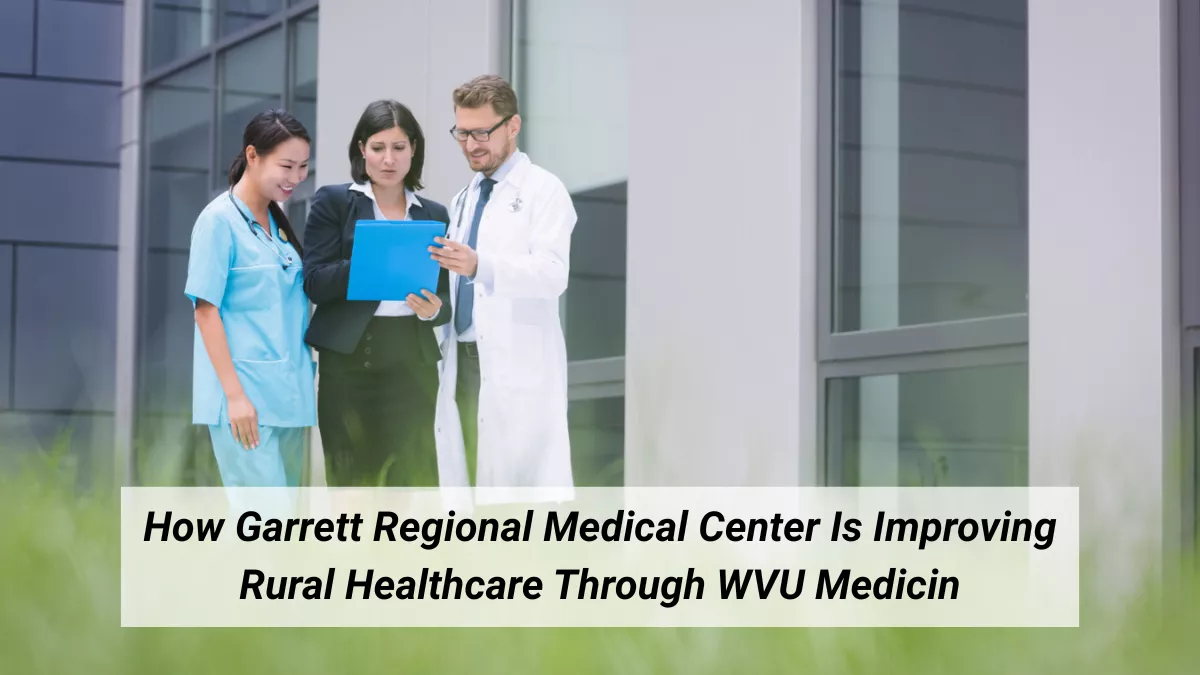
Garrett Regional Medical Center plays a critical role in strengthening healthcare access for rural communities in western Maryland, and its partnership with WVU Medicine has accelerated that mission in meaningful ways. Rural hospitals often face challenges such as limited specialty care, workforce shortages, and financial pressure, which can restrict patient options and outcomes.
By aligning with a large academic health system, Garrett Regional Medical Center has been able to expand services, modernize care delivery, and retain local access while benefiting from regional expertise. This collaboration blends community-focused values with advanced clinical resources, creating a model that supports both quality and sustainability.

Patients no longer need to travel long distances for many services, and clinicians gain support through shared knowledge, technology, and training. The result is a more resilient rural healthcare system designed to meet evolving needs while keeping care close to home for families across the region.
Strengthening Access to Specialized Care
Garrett Regional Medical Center’s affiliation with WVU Medicine has significantly improved access to specialized medical services that are often scarce in rural areas. Through this partnership, patients benefit from expanded cardiology, oncology, neurology, and surgical consultations without leaving their community.
Telemedicine connections and visiting specialist clinics allow complex cases to be reviewed collaboratively, ensuring accurate diagnoses and timely treatment plans. This integrated approach reduces delays that commonly occur when patients must navigate multiple systems independently. Physicians at Garrett Regional Medical Center can quickly consult WVU Medicine specialists, leading to better coordinated care and fewer unnecessary transfers.
For residents, this means earlier interventions, improved outcomes, and reduced travel burdens. The collaboration also enhances continuity of care, as patients receive follow-up support locally after specialized evaluations. By bridging geographic gaps, the partnership directly addresses one of rural healthcare’s greatest challenges and strengthens trust in local medical services.
Advancing Technology and Digital Health
The partnership with WVU Medicine has enabled Garrett Regional Medical Center to adopt advanced medical technologies that enhance diagnostic accuracy and treatment efficiency. Investments in modern imaging, electronic health records integration, and telehealth platforms allow clinicians to deliver higher-quality care while maintaining patient safety.
Digital connectivity ensures that patient data flows seamlessly between providers, reducing duplication and medical errors. Telehealth services have become especially valuable for rural patients managing chronic conditions, enabling routine check-ins without frequent travel. Emergency care has also benefited from real-time specialist input during critical situations.
These technological advancements support faster decision-making and more personalized treatment plans. Importantly, they also empower patients by improving communication and access to information. By leveraging WVU Medicine’s infrastructure and expertise, Garrett Regional Medical Center has transformed technology into a practical tool that supports both clinical excellence and patient convenience in a rural setting.
Enhancing Workforce Recruitment and Retention
Rural hospitals often struggle to attract and retain skilled healthcare professionals, but Garrett Regional Medical Center has seen measurable improvements through its connection with WVU Medicine. Affiliation with a respected academic health system enhances professional credibility and provides clinicians with access to continuing education, research opportunities, and specialist mentorship.

Physicians, nurses, and allied health professionals benefit from collaborative networks that reduce professional isolation. Training programs and shared staffing models help fill critical gaps while maintaining high standards of care. This supportive environment encourages long-term career growth, making rural practice more appealing to new graduates and experienced providers alike.
Additionally, staff gain confidence knowing they can rely on system-wide expertise when managing complex cases. By investing in people as much as infrastructure, the partnership strengthens workforce stability, improves morale, and ensures that rural communities receive consistent, high-quality healthcare services.
Improving Emergency and Critical Care Services
Emergency care is a cornerstone of rural healthcare, and Garrett Regional Medical Center has enhanced its capabilities through WVU Medicine collaboration. Access to system-wide protocols, trauma expertise, and rapid specialist consultation has elevated the hospital’s readiness for complex emergencies. Clinicians can quickly coordinate with tertiary care centers when higher-level intervention is required, ensuring smooth and timely transfers.
At the same time, many emergencies can now be stabilized and treated locally, reducing patient stress and transport risks. Shared training initiatives improve response times and clinical confidence during critical situations. Advanced tele-emergency services allow real-time guidance during stroke, cardiac, and trauma cases.
These improvements translate into better survival rates and recovery outcomes. By strengthening emergency and critical care, the partnership ensures that rural residents receive prompt, reliable treatment when every minute matters most.
Expanding Preventive and Community Health Programs
Preventive care is essential for long-term population health, and Garrett Regional Medical Center has expanded its outreach through WVU Medicine support. Community health screenings, chronic disease management programs, and wellness education initiatives have grown in scope and effectiveness.
Data-driven strategies help identify local health trends, enabling targeted interventions for conditions such as diabetes, heart disease, and respiratory illness. Collaboration also supports public health preparedness and vaccination efforts. These programs emphasize early detection and lifestyle management, reducing hospitalizations and long-term healthcare costs.
By integrating preventive care with primary and specialty services, the hospital fosters a proactive approach to health. Community trust is strengthened when residents see consistent investment in their well-being. This focus on prevention demonstrates how rural hospitals can move beyond reactive care and become leaders in promoting healthier, more resilient communities.
Strengthening Financial Stability and Sustainability
Financial sustainability is a persistent concern for rural hospitals, and Garrett Regional Medical Center benefits from WVU Medicine’s strategic and operational support. Shared resources, group purchasing, and system-level expertise help control costs while maintaining quality standards.
Access to broader reimbursement strategies and value-based care initiatives improves financial performance. This stability allows the hospital to reinvest in facilities, technology, and staff development. Strategic planning support also helps navigate regulatory changes and market pressures. By reducing financial vulnerability, the partnership safeguards essential services that might otherwise be at risk.
Importantly, local governance and community focus are preserved, ensuring decisions align with regional needs. Sustainable operations enable long-term planning rather than short-term crisis management. Through collaboration, Garrett Regional Medical Center strengthens its economic foundation, ensuring continued access to care for future generations.
Supporting Patient-Centered Care Models
Patient-centered care is at the heart of Garrett Regional Medical Center’s mission, and the WVU Medicine partnership reinforces this commitment. Integrated care teams coordinate across disciplines, ensuring that treatment plans reflect individual patient needs and preferences. Improved communication reduces fragmentation and enhances the overall care experience.
Patients benefit from smoother transitions between inpatient, outpatient, and specialty services. Educational resources and care coordination support empower individuals to actively participate in their health decisions. The partnership also emphasizes quality metrics and patient satisfaction, driving continuous improvement.
By combining local familiarity with system-wide best practices, the hospital delivers compassionate, personalized care within a structured framework. This balance ensures that rural patients receive the same level of attention and respect expected in larger urban centers, without sacrificing the personal connections that define community-based healthcare.
Building a Regional Network of Care
Garrett Regional Medical Center’s collaboration with WVU Medicine strengthens regional healthcare coordination across state lines. Patients gain access to a broader network of hospitals, clinics, and specialists, improving continuity of care. Referral pathways are clearer and more efficient, reducing delays and confusion.
Shared clinical standards promote consistency and quality across the network. This regional integration is especially valuable for complex or rare conditions requiring multidisciplinary expertise. At the same time, local care remains the foundation, with advanced services layered in as needed.
The network approach ensures that rural communities are not isolated within the healthcare system. Instead, they become connected hubs within a larger ecosystem designed to deliver comprehensive, coordinated care. This model demonstrates how partnerships can overcome geographic barriers and create sustainable regional health solutions.
Last Thought
Garrett Regional Medical Center’s partnership with WVU Medicine illustrates how collaboration can transform rural healthcare without losing its community-centered identity. By expanding access, strengthening the workforce, advancing technology, and ensuring financial stability, the hospital delivers higher-quality care close to home. This model proves that rural hospitals can thrive when supported by integrated systems that respect local needs.
As healthcare continues to evolve, such partnerships offer a practical path forward. They protect essential services, improve patient outcomes, and build resilient communities. Ultimately, this collaboration shows that geography does not have to limit healthcare quality when shared vision and strategic alignment guide progress.
FAQs
How does WVU Medicine support Garrett Regional Medical Center?
It provides specialty access, technology, clinical expertise, and operational support.
Does the partnership affect local control?
No, the hospital maintains community-focused governance and decision-making.
Can patients access specialists without traveling far?
Yes, many specialty services are available locally or through telemedicine.
Why is this partnership important for rural healthcare?
It improves access, quality, and sustainability for underserved rural communities.