
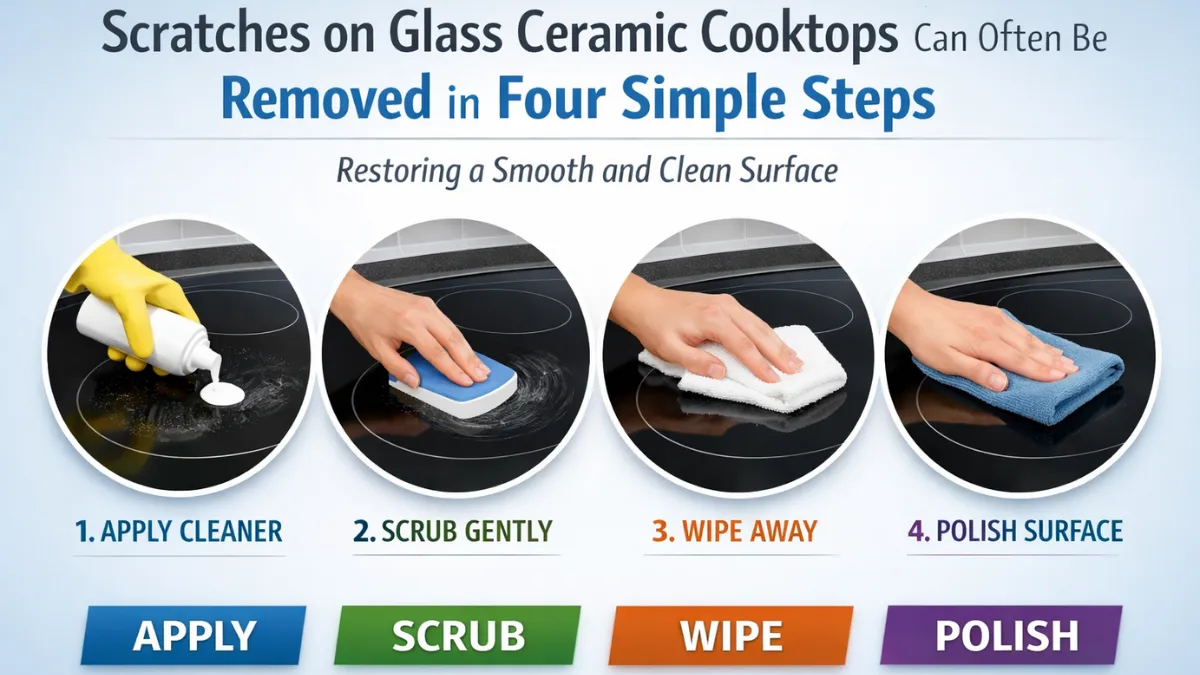
Glass ceramic cooktops look modern and elegant, but even tiny scratches can ruin their clean appearance. Many people assume these marks are permanent and start thinking about costly replacements. In reality, scratches on glass ceramic cooktops can often be removed or greatly reduced using four simple steps. With the right method and a little patience, it’s possible to bring back a smooth, shiny surface and extend the life of your cooktop.
Why Glass Ceramic Cooktops Scratch Easily
Glass ceramic cooktops are designed to handle extreme heat, but their smooth surface is sensitive to friction. Scratches usually appear due to everyday habits rather than poor-quality materials. Sliding cookware instead of lifting it, using rough sponges, or allowing food spills to harden can all damage the surface. Even tiny particles like salt or sand trapped under a pan can leave visible marks when the pan is moved.


Identifying Which Scratches Can Be Fixed
Not all scratches behave the same way. Light surface scratches and faint swirl marks are the easiest to treat. These scratches sit on the top layer and mainly affect how light reflects off the glass. Deeper scratches that you can feel clearly with your fingernail may not disappear completely, but they can often be softened so they become far less noticeable during daily use.
Step One: Deep Cleaning Before Any Repair
The first and most important step is proper cleaning. Any remaining dirt can make scratches worse during polishing. Allow the cooktop to cool completely, then clean it using warm water, mild dish soap, and a soft cloth. Remove all grease and residue, then dry the surface thoroughly. A clean surface ensures that polishing focuses only on the scratch itself.

Step Two: Applying a Gentle Polishing Compound
After cleaning, a non-abrasive polishing agent is applied to the scratched area. Products designed specifically for glass ceramic cooktops work best, but mild glass polishing compounds can also help. For extremely light marks, a soft paste made from baking soda and water may be used carefully. Apply only a small amount directly onto the scratch to avoid unnecessary friction on surrounding areas.
Step Three: Polishing with Care and Control
Polishing is where patience matters most. Using a microfiber cloth or felt pad, rub the polishing compound in slow, circular motions. Apply very light pressure and focus only on the scratched section. After one or two minutes, wipe the area clean and check progress. This step may need repeating, but excessive force should always be avoided to protect the glass surface.

Step Four: Buffing and Restoring Shine
Once the scratch is reduced, the surface should be buffed to restore its original shine. Use a clean, dry microfiber cloth to remove any remaining residue. Many homeowners also apply a cooktop conditioner at this stage, which creates a protective layer that reduces friction and helps prevent future scratches.
What Not to Do When Treating Scratches
Certain methods can permanently damage glass ceramic cooktops. Avoid using steel wool, metal scrapers without lubricant, or powdered cleaners not made for glass. Household hacks involving toothpaste or sandpaper are risky and often cause dull patches or deeper scratches. If a technique feels aggressive, it’s best not to try it.

When Scratches Cannot Be Removed
Some scratches are simply too deep to fix at home. Cracks, chips, or long gouges that affect the structure of the glass should not be polished. These issues can impact safety and heating efficiency. In such cases, professional inspection or replacement may be the safest option.
How to Prevent Future Scratches
Preventing scratches is easier than repairing them. Always lift cookware instead of sliding it across the surface. Clean the bottoms of pots and pans regularly, and avoid using cookware with rough or uneven bases. Clean spills as soon as the cooktop cools, and stick to non-abrasive cleaning tools designed for glass ceramic surfaces.

Why These Four Steps Are Effective
Polishing works by smoothing the microscopic edges of a scratch rather than removing material from the glass. When light no longer catches those rough edges, the scratch becomes invisible to the eye. This method is widely used in professional glass care and is safe when performed correctly with gentle products.
Conclusion
Scratches on glass ceramic cooktops can often be removed in four simple steps, restoring a smooth and clean surface without expensive repairs. By understanding your cooktop, using the right materials, and following a careful process, you can keep your kitchen looking modern and well-maintained. With proper prevention and gentle care, your glass ceramic cooktop can remain scratch-free and beautiful for years to come.