
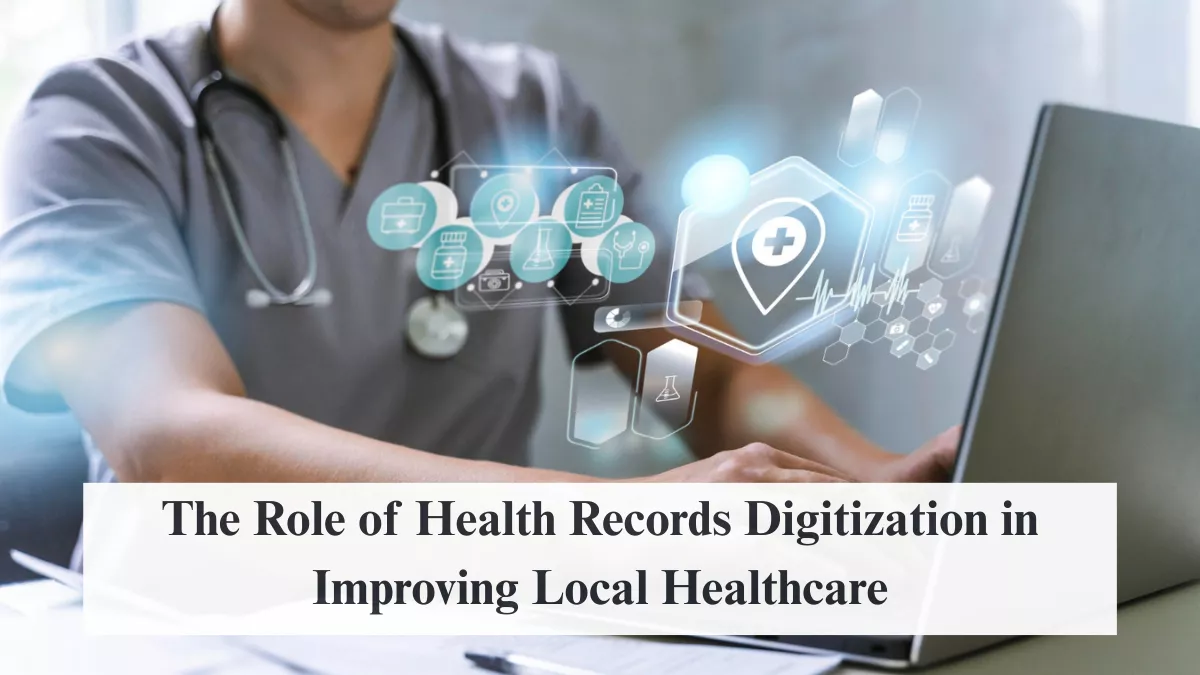
Healthcare systems around the world are undergoing a fundamental transformation as paper-based records give way to digital health records. Local healthcare providers, including community hospitals, clinics, and primary care centers, are increasingly adopting electronic health records to improve efficiency, accuracy, and patient outcomes.
Digitization allows medical information to be stored, accessed, and shared securely across care settings, reducing delays and minimizing errors. For local healthcare systems that often serve diverse populations with limited resources, digital health records provide tools to coordinate care more effectively. By improving documentation, streamlining workflows, and enabling data-driven decision-making, health records digitization plays a critical role in strengthening healthcare delivery at the community level and ensuring patients receive timely, high-quality care.


Understanding Health Records Digitization
Health records digitization involves converting patient medical information from paper files into electronic formats that can be securely stored and accessed through digital systems. These records include medical histories, diagnoses, laboratory results, imaging reports, prescriptions, and treatment plans. Electronic health records systems are designed to organize this information in a structured and searchable format.
For local healthcare providers, digitization eliminates the inefficiencies associated with manual filing, misplaced documents, and illegible handwriting. Digital records also enable authorized healthcare professionals to access patient information in real time, supporting faster decision-making and continuity of care across multiple providers and locations.

Improving Accuracy and Reducing Medical Errors
One of the most significant benefits of health records digitization is the reduction of medical errors. Paper-based records are prone to transcription mistakes, incomplete documentation, and misinterpretation. Electronic health records improve accuracy by standardizing data entry and reducing reliance on handwritten notes. Built-in validation tools alert providers to missing information or potential inconsistencies.
Accurate records ensure that clinicians have complete and reliable information when diagnosing conditions or prescribing treatments. In local healthcare settings, where staff may manage high patient volumes, digital records play a vital role in maintaining safe and consistent care.

Enhancing Care Coordination Among Providers
Local healthcare systems often involve multiple providers, including primary care physicians, specialists, laboratories, and pharmacies. Digitized health records facilitate seamless communication among these stakeholders by allowing authorized access to shared patient information. Care coordination improves when providers can review test results, treatment histories, and care plans without delays.
This reduces duplication of tests and conflicting treatments. Improved coordination is especially important for patients with chronic conditions who require ongoing management across different care settings. Digital records help ensure continuity, consistency, and clarity in patient care.

Supporting Faster Clinical Decision-Making
Timely access to patient information is essential for effective clinical decision-making. Health records digitization enables providers to retrieve complete medical histories instantly, even during emergencies.
Clinicians can quickly review allergies, previous diagnoses, medications, and lab results before making treatment decisions. Faster access reduces delays in care and improves patient safety. In local hospitals and clinics, where emergency situations are common, digital records empower providers to act confidently and efficiently, leading to better outcomes.

Strengthening Preventive Care and Early Detection
Digitized health records support preventive care by enabling systematic tracking of screenings, vaccinations, and routine checkups. Electronic systems can generate reminders for both patients and providers when preventive services are due. Early detection of health conditions becomes more achievable when providers can analyze trends in patient data over time.
Local healthcare organizations use digital records to identify at-risk populations and implement targeted outreach programs. Preventive care supported by digitization reduces disease progression, lowers healthcare costs, and improves community health outcomes.
Enhancing Chronic Disease Management
Managing chronic diseases requires consistent monitoring and long-term care coordination. Health records digitization allows providers to track patient progress, medication adherence, and treatment outcomes over time. Electronic records make it easier to identify changes in health status and adjust care plans accordingly.
For local healthcare providers managing conditions such as diabetes, hypertension, or asthma, digital records provide tools to deliver personalized and proactive care. Improved chronic disease management leads to fewer complications and better quality of life for patients.
Improving Patient Engagement and Empowerment
Digitized health records enhance patient engagement by providing individuals with access to their own medical information through patient portals. Patients can review test results, medication lists, and appointment schedules, increasing transparency and trust.
Access to information empowers patients to take an active role in their care. Local healthcare providers benefit when patients are more informed and involved, as engagement improves adherence to treatment plans and follow-up care. Digital records foster collaboration between patients and providers, strengthening the healthcare relationship.
Streamlining Administrative Processes
Administrative efficiency is a key advantage of health records digitization. Electronic systems reduce paperwork, simplify billing processes, and streamline scheduling.
Automated documentation saves time for healthcare staff, allowing them to focus more on patient care. For local clinics and hospitals with limited administrative resources, digitization improves operational efficiency and reduces overhead costs. Streamlined processes contribute to shorter wait times and improved patient satisfaction.
Supporting Data-Driven Quality Improvement
Digital health records generate valuable data that can be analyzed to improve care quality. Local healthcare organizations use this data to monitor performance metrics, identify gaps in care, and evaluate treatment outcomes.
Quality improvement initiatives become more effective when decisions are based on accurate and comprehensive data. Digitization supports continuous improvement efforts that enhance patient safety, clinical effectiveness, and service delivery across local healthcare systems.
Enhancing Emergency Care Services
In emergency situations, access to accurate patient information can be lifesaving. Digitized health records allow emergency department staff to quickly review critical details such as allergies, medications, and medical history. This reduces the risk of adverse reactions and inappropriate treatments.
Local hospitals benefit from digital records by improving response times and clinical accuracy during emergencies. Enhanced emergency care contributes to better survival rates and reduced complications.
Improving Continuity of Care During Transitions
Transitions of care, such as hospital discharges or referrals, are vulnerable points for errors and miscommunication. Health records digitization supports smooth transitions by ensuring that updated information follows the patient across care settings. Discharge summaries, medication lists, and follow-up instructions can be shared electronically with primary care providers and specialists. Improved continuity reduces readmissions and enhances recovery, particularly in local healthcare environments where coordination is essential.
Reducing Healthcare Costs Over Time
While implementing digital systems requires initial investment, health records digitization reduces costs in the long term. Savings result from decreased paperwork, fewer duplicated tests, and reduced medical errors. Efficient workflows and better resource utilization further contribute to cost reduction. For local healthcare providers operating within tight budgets, digitization supports financial sustainability while maintaining quality care.
Supporting Public Health Monitoring
Digital health records play an important role in public health surveillance and planning. Aggregated data helps local health authorities monitor disease trends, vaccination coverage, and emerging health threats. Timely data supports informed decision-making and rapid response to public health challenges. Local healthcare providers contribute to broader community health efforts through accurate and timely reporting enabled by digitization.
Enhancing Security and Confidentiality
Protecting patient information is a critical responsibility in healthcare. Digitized health records incorporate security measures such as encryption, access controls, and audit trails. These safeguards reduce the risk of unauthorized access and data breaches compared to paper records. Local healthcare providers implement digital security protocols to maintain patient trust and comply with privacy regulations. Secure systems ensure that sensitive information remains protected while accessible to authorized users.
Supporting Telehealth and Remote Care
Health records digitization is essential for the effective delivery of telehealth services. Digital records enable providers to review patient histories and document virtual visits seamlessly. Integration with remote monitoring tools allows real-time data collection and analysis. Local healthcare systems use digitized records to expand access to care for patients in remote or underserved areas. Telehealth supported by digital records improves convenience and continuity of care.
Improving Medication Management
Accurate medication records are vital for patient safety. Digitized systems track prescriptions, dosages, and medication histories, reducing the risk of errors. Providers can quickly identify potential drug interactions and allergies. Local healthcare facilities benefit from improved medication reconciliation and monitoring. Enhanced medication management leads to safer treatment and better outcomes for patients.
Facilitating Clinical Training and Education
Digital health records support education and training for healthcare professionals. Access to anonymized data allows staff to learn from real-world cases and improve clinical skills. Training programs can use digital records to demonstrate best practices and enhance documentation standards. Local healthcare organizations benefit from a more skilled and informed workforce, improving overall care quality.
Addressing Health Equity and Access
Health records digitization helps identify disparities in care delivery and outcomes. Data analysis reveals gaps related to demographics, geography, or socioeconomic factors. Local healthcare providers use this information to design targeted interventions and outreach programs. Digitization supports equitable care by ensuring that all patients receive appropriate and timely services regardless of background.
Encouraging Interdisciplinary Collaboration
Effective healthcare requires collaboration among physicians, nurses, pharmacists, and allied health professionals. Digitized records provide a shared platform for communication and documentation. Interdisciplinary teams can coordinate care more efficiently when everyone has access to the same information. Local healthcare systems benefit from improved teamwork and reduced fragmentation of care.
Adapting to Healthcare Innovation
Healthcare innovation continues to evolve rapidly, introducing new technologies and treatment approaches. Digitized health records provide a foundation for integrating advanced tools such as artificial intelligence and predictive analytics. Local healthcare providers can adapt more easily to innovation when digital infrastructure is in place. This adaptability ensures ongoing improvement in care delivery and patient outcomes.
Overcoming Implementation Challenges
Despite its benefits, health records digitization presents challenges, including costs, training needs, and resistance to change. Local healthcare organizations address these challenges through phased implementation, staff education, and leadership support. Overcoming barriers requires commitment and collaboration. Successful adoption ensures that the long-term benefits of digitization outweigh initial difficulties.
Building Patient Trust Through Transparency
Transparency in healthcare builds trust between patients and providers. Digitized records allow patients to see how their information is used and shared. Clear documentation improves accountability and communication. Local healthcare providers strengthen trust by demonstrating responsible and ethical use of digital health information.
Conclusion: Advancing Local Healthcare Through Digitization
Health records digitization plays a transformative role in improving local healthcare systems. By enhancing accuracy, coordination, efficiency, and patient engagement, digital records support safer and more effective care. Local healthcare providers benefit from streamlined operations, data-driven decision-making, and improved outcomes.
As healthcare demands continue to grow, digitization ensures that local systems remain resilient, responsive, and patient-centered. Investing in digital health records is not just a technological upgrade but a foundational step toward stronger, more sustainable community healthcare.