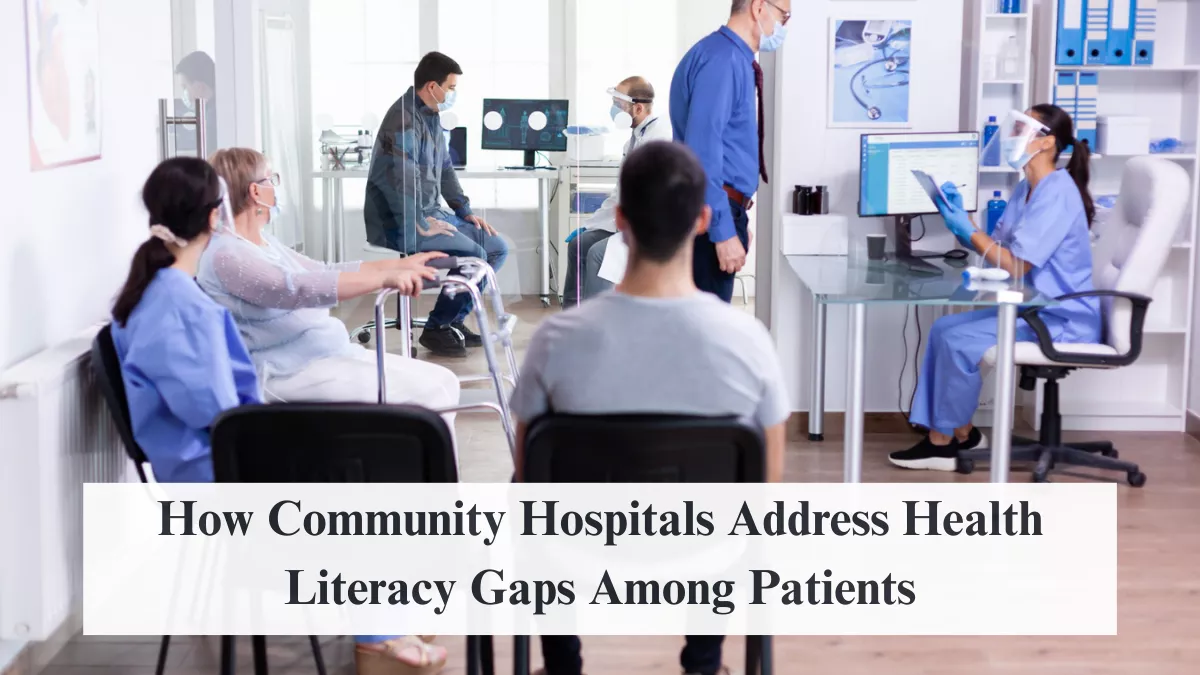
Health literacy is the ability of patients to obtain, process, and understand basic health information needed to make informed medical decisions. Low health literacy can lead to poor health outcomes, increased hospitalizations, medication errors, and reduced adherence to treatment plans. Community hospitals play a critical role in addressing these gaps by implementing patient-centered strategies to improve understanding, engagement, and access to healthcare services. Health literacy is not only about reading ability but also includes numeracy, comprehension of medical instructions, and navigating healthcare systems effectively.
By identifying patients at risk for low health literacy and providing targeted support, community hospitals empower patients to participate actively in their care, enhance safety, and promote overall wellness. Addressing health literacy gaps is vital for improving outcomes, reducing disparities, and creating equitable healthcare environments.
 How Community Hospitals Are Using AI to Improve Diagnostic Accuracy
The Importance of Health Literacy in Patient Outcomes
Health literacy directly affects patient outcomes by influencing their ability to follow medical instructions, manage chronic conditions, and engage in preventive care. Patients with low health literacy are more likely to misunderstand dosage instructions, fail to adhere to treatment regimens, and delay seeking medical attention for symptoms.
Community hospitals recognize that bridging these gaps improves recovery, reduces complications, and lowers readmission rates. Educated patients are better equipped to monitor symptoms, communicate effectively with providers, and make informed health decisions. By promoting health literacy, hospitals ensure patients have the knowledge and tools necessary for safe, effective, and self-directed care, ultimately contributing to improved population health and enhanced patient satisfaction.
 The Role of Local Medical Centers in Promoting Heart Health Awareness
Assessing Health Literacy Levels
Community hospitals begin addressing health literacy by assessing patient comprehension and communication abilities. Tools such as the Rapid Estimate of Adult Literacy in Medicine (REALM), the Test of Functional Health Literacy in Adults (TOFHLA), and informal patient interviews help identify individuals who may struggle with medical instructions.
Assessment is critical for tailoring communication strategies, educational materials, and care plans to the patient’s needs. Recognizing low health literacy allows healthcare teams to intervene early and implement supportive strategies, preventing misunderstandings that could compromise safety. By systematically assessing health literacy, community hospitals ensure that all patients receive care that is accessible, understandable, and actionable.
 How Mobile Clinics Are Expanding Healthcare Access in Underserved Areas
Simplifying Communication With Patients
Effective communication is essential to bridging health literacy gaps. Community hospitals prioritize plain language, avoiding medical jargon that may confuse patients. Visual aids, diagrams, and simplified written materials enhance understanding, particularly for complex medical conditions. Providers are trained to use teach-back methods, where patients repeat instructions in their own words to confirm comprehension.
Verbal explanations are reinforced with printed or digital resources that patients can reference at home. Clear, empathetic communication builds trust and ensures that patients are fully informed about diagnoses, treatments, medications, and follow-up care. Hospitals that implement communication best practices see improved adherence, engagement, and patient outcomes.
 Why Hospital-Based Exercise Programs Improve Patient Recovery Rates
Patient Education Programs
Structured patient education programs are a key strategy for addressing health literacy gaps. Community hospitals offer workshops, group sessions, and one-on-one counseling to provide information on disease management, preventive care, and healthy lifestyle choices. Education covers medication administration, diet, exercise, symptom monitoring, and navigating the healthcare system.
Programs are tailored to cultural, linguistic, and literacy needs, ensuring accessibility for diverse populations. Education reinforces understanding, reduces anxiety, and empowers patients to take an active role in their care. Community hospitals also provide digital resources, videos, and interactive platforms to supplement learning. Consistent, patient-centered education fosters informed decision-making and supports better health outcomes.
 How Community Hospitals Are Supporting Nutrition and Lifestyle Education
Cultural and Linguistic Competency
Cultural and linguistic factors significantly influence health literacy. Community hospitals address these factors by providing translation services, culturally sensitive materials, and bilingual staff. Understanding cultural beliefs, health practices, and language preferences helps providers communicate effectively and tailor care instructions.
Hospitals also offer interpreter services during consultations and follow-up appointments to ensure accurate understanding. Culturally competent education fosters trust, reduces barriers to care, and enhances patient engagement. By integrating cultural awareness into health literacy initiatives, community hospitals create inclusive environments where all patients can access, understand, and act on medical information safely and effectively.
Integrating Technology and Digital Resources
Technology offers innovative solutions for addressing health literacy gaps. Community hospitals provide patient portals, mobile apps, and online educational materials that allow patients to access information in a user-friendly format. Digital tools can include instructional videos, interactive guides, and reminders for medications or appointments.
Telehealth services also allow patients to ask questions and receive guidance remotely, enhancing access and understanding. Hospitals train patients to navigate these platforms, improving digital health literacy alongside traditional education. Integrating technology empowers patients to engage actively in their care, monitor progress, and maintain communication with healthcare teams, ultimately improving outcomes and reducing misunderstandings.
Empowering Patients Through Self-Management
Empowering patients to manage their health independently is central to bridging health literacy gaps. Community hospitals provide tools, education, and coaching that enable patients to monitor symptoms, adhere to treatment plans, and make informed lifestyle choices. Self-management strategies include medication tracking, symptom journals, goal setting, and decision-making guidance.
Empowered patients are more likely to take responsibility for their care, recognize warning signs, and seek timely assistance. Hospitals support self-management by reinforcing knowledge during follow-up appointments and offering continuous guidance. Patient empowerment strengthens confidence, promotes adherence, and reduces the risk of complications, enhancing long-term health outcomes.
Collaboration With Multidisciplinary Teams
Addressing health literacy requires collaboration among multidisciplinary teams, including physicians, nurses, pharmacists, social workers, and case managers. Each professional contributes specialized expertise to educate, communicate, and support patients effectively. Nurses provide bedside teaching, pharmacists review medications, social workers address social determinants, and case managers coordinate care. Team collaboration ensures consistency, reinforces key messages, and addresses diverse patient needs.
Multidisciplinary efforts create a comprehensive approach that bridges knowledge gaps and strengthens understanding. Community hospitals rely on these teams to deliver patient-centered care that enhances health literacy and improves outcomes.
Addressing Social Determinants of Health
Social determinants of health, such as income, education, access to transportation, and housing stability, can impact patients’ ability to understand and act on medical information. Community hospitals assess these factors and connect patients with resources, including transportation, financial assistance, or community programs.
Addressing social determinants ensures that patients can follow instructions, attend appointments, and maintain treatment plans. By integrating social support into health literacy initiatives, hospitals provide holistic care that accounts for barriers beyond medical comprehension. Reducing these barriers improves adherence, engagement, and overall health outcomes.
Follow-Up Care and Reinforcement
Follow-up care is essential for reinforcing health literacy. Community hospitals schedule timely follow-up appointments to review treatment plans, address questions, and ensure comprehension. Telehealth and home visits allow providers to assess understanding, monitor progress, and correct misunderstandings.
Reinforcement during follow-ups solidifies learning, enhances adherence, and allows for early intervention if complications arise. Regular follow-up creates continuity of care, builds trust, and promotes patient engagement, making it a vital strategy for reducing gaps in health literacy and improving outcomes.
Community Outreach and Education Programs
Community hospitals extend health literacy initiatives beyond the hospital through outreach programs. These programs provide education on preventive care, chronic disease management, nutrition, and lifestyle choices. Outreach efforts include health fairs, workshops, and partnerships with schools, community centers, and local organizations. By delivering accessible, culturally relevant, and engaging health information, hospitals reach broader populations and address disparities.
Community outreach reinforces knowledge, encourages proactive healthcare behavior, and strengthens patient-provider relationships. Engaging patients in their communities fosters long-term understanding and empowerment, reducing health literacy gaps across populations.
Evaluation and Continuous Improvement
Community hospitals monitor the effectiveness of health literacy programs through patient feedback, outcome measures, and quality improvement initiatives. Metrics such as adherence rates, readmissions, patient comprehension, and satisfaction provide insight into program success.
Hospitals adjust strategies based on evaluation, refining educational materials, communication methods, and support services to meet evolving patient needs. Continuous improvement ensures that health literacy initiatives remain effective, accessible, and responsive. By evaluating outcomes and implementing changes, hospitals demonstrate a commitment to patient-centered care and equitable access to information.
The Role of Policy and Leadership
Hospital leadership and policy play a significant role in addressing health literacy gaps. Policies supporting plain language communication, staff training, and patient-centered education establish organizational standards for health literacy. Leadership ensures that resources, technology, and multidisciplinary collaboration are available to implement initiatives effectively.
By embedding health literacy into hospital culture, policies, and strategic plans, community hospitals create sustainable programs that prioritize patient understanding and safety. Strong leadership commitment ensures that health literacy remains a central focus of care delivery and quality improvement.
Impact on Patient Safety and Outcomes
Improving health literacy directly enhances patient safety. Patients who understand their conditions, medications, and care plans are less likely to make errors, experience complications, or require hospital readmissions. Health-literate patients can recognize warning signs, communicate concerns, and participate actively in their care.
Community hospitals that address health literacy gaps see measurable improvements in adherence, recovery, and satisfaction. Enhanced comprehension reduces stress, promotes confidence, and supports long-term wellness. Addressing health literacy is not only an educational initiative but also a critical safety and quality improvement strategy.
Future Directions in Health Literacy Initiatives
Future efforts to improve health literacy will integrate technology, personalized education, and data-driven approaches. Artificial intelligence, interactive apps, and virtual education platforms can provide customized guidance based on individual patient needs.
Telehealth will expand access to real-time education and support. Hospitals will continue to prioritize cultural competency, community engagement, and multidisciplinary collaboration to address evolving patient populations. By innovating strategies, leveraging digital tools, and fostering patient empowerment, community hospitals will enhance comprehension, engagement, and health outcomes, reducing disparities and promoting equitable care.
Conclusion
Community hospitals play a critical role in addressing health literacy gaps among patients. By assessing literacy levels, simplifying communication, providing education, leveraging technology, and integrating multidisciplinary support, hospitals empower patients to make informed healthcare decisions.
Addressing social determinants, reinforcing knowledge through follow-up care, and engaging communities further enhance comprehension and adherence. Effective health literacy initiatives improve patient safety, reduce complications, prevent readmissions, and enhance overall health outcomes. By prioritizing patient-centered education, community hospitals create equitable healthcare environments that support understanding, engagement, and long-term wellness. Health literacy is fundamental to achieving high-quality, effective, and inclusive care.
Frequently Asked Questions (FAQs)
What is health literacy?
Health literacy is the ability to obtain, understand, and use health information to make informed decisions.
How do community hospitals improve health literacy?
They provide simplified communication, patient education programs, follow-up care, technology tools, and culturally competent services.
How do community hospitals improve health literacy?
They provide simplified communication, patient education programs, follow-up care, technology tools, and culturally competent services.
Why is health literacy important for patient outcomes?
Patients with higher health literacy adhere to treatments, recognize warning signs, and avoid complications, leading to better outcomes.
Who benefits from health literacy initiatives?
All patients benefit, especially those with chronic conditions, limited education, or language barriers.