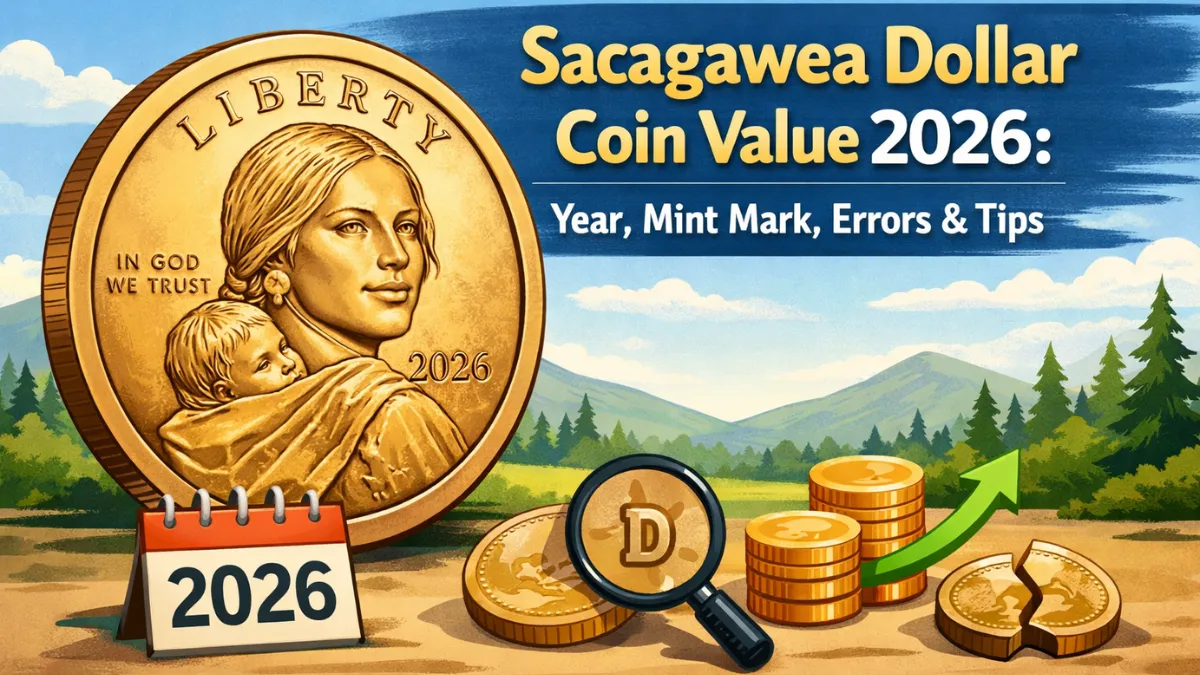
The Sacagawea dollar coin, first introduced in 2000, remains one of the most recognizable and collectible coins in the United States. Famous for its golden color and the elegant depiction of Sacagawea carrying her infant son, this coin has captured the interest of both casual collectors and serious numismatists.
As we enter 2026, knowing the factors that determine a Sacagawea coin’s value is essential for collectors. From the year of minting to mint marks, errors, and coin condition, each element plays a significant role in its worth. This guide provides everything you need to evaluate, collect, and protect your Sacagawea dollar coins.
 1976 Drummer Boy Quarter Value Guide Rare Coins Worth $550,000
Understanding Sacagawea Dollar Coins
Sacagawea dollars are made with a copper core clad in manganese-brass, giving them a distinctive golden color. The obverse features Sacagawea carrying her son, Jean Baptiste, while the reverse has celebrated American history and achievements, including Native American themes in later editions.
Though many coins are in circulation and worth face value, certain years, mint marks, or error coins have become highly valuable for collectors, making the Sacagawea dollar an exciting addition to any collection.
 Rare Bicentennial Quarter Worth $3.2 Million – Check Your Change Today
Year of Issue and Its Impact on Value
The year a Sacagawea dollar was minted is a key factor in its value. Early coins from 2000 and 2001 tend to be the most sought after. Special releases, such as the 2000 “Proof” coins or the “Westward Journey” series, can fetch higher prices due to rarity.
Coins from later years are generally more common, though some specific editions still carry collector value. Collectors often focus on completing sets by year, which increases interest in certain coins depending on rarity and condition.
 Sacagawea Dollar Value Chart 2026 Complete Guide to Mint Marks Errors and Grades
Mint Marks: Why They Matter
Mint marks indicate where a coin was produced, and they can significantly affect a coin’s value. The Sacagawea dollar uses three main mint marks: P for Philadelphia, D for Denver, and S for San Francisco, which are usually reserved for proof coins.
Coins from certain mints are rarer than others. For example, a 2000-D Sacagawea in mint condition is highly prized, while many coins from the Philadelphia Mint are more common. Understanding mint marks helps collectors identify valuable coins and avoid overpaying for common issues.
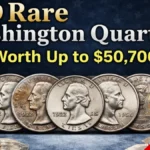 9 Rare Washington Quarters Worth Up to $50,700 – Full Value Guide & Details
Coin Errors and Varieties
Errors and varieties can dramatically increase a coin’s value. Common error types include double die errors, where letters or numbers appear doubled; off-center strikes, where the coin’s design is shifted; and clipped planchets, where part of the coin is missing.
These mistakes are rare and often command premium prices among collectors. Even minor differences, like subtle design variations, can make a coin more desirable, especially when graded professionally.
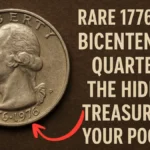 Rare 1776–1976 Bicentennial Quarter: The Hidden Treasure in Your Pocket
Condition and Grading
Coin condition is another major factor affecting value. Coins in uncirculated or proof condition are generally more valuable than those with signs of wear. Grading assesses the coin’s luster, surface marks, and sharpness of detail.
Terms like MS (Mint State) and PF (Proof) indicate high-quality coins. Proper storage and handling are crucial because scratches, discoloration, or other damage can significantly reduce a coin’s value.
Tips for Collectors
Collectors can maximize their coin’s value by following simple tips. Regularly check coins in circulation, as even everyday Sacagawea dollars can hide rare mint mark varieties or errors. Use protective holders or capsules to maintain condition and avoid damage.
Stay informed about market trends through coin catalogs and guides, and consider professional grading for rare or high-value coins. Beginners should focus on specific years or mint marks to build expertise gradually, making their collection more meaningful and potentially valuable.
Popular Sacagawea Dollar Values in 2026
Most circulated Sacagawea dollars are worth their face value of $1. However, rare coins or errors can fetch much higher prices. For example, 2000-P and 2000-D proof coins can range from $10 to $50 depending on condition, while rare error coins can reach $200 or more.
Even the 2009 Native American dollar coins can be worth $3–$10 in uncirculated condition. Collectors must consider rarity, condition, and demand when evaluating a coin’s potential value.
Conclusion
The Sacagawea dollar coin remains a captivating piece of American history and a rewarding collectible in 2026. Its value depends on factors such as the year of minting, mint mark, condition, and possible errors.
Collectors should focus on careful evaluation, proper storage, and staying informed about market trends to maximize their investment. Whether you are a beginner or a seasoned numismatist, the Sacagawea dollar offers a unique combination of cultural significance, historical charm, and numismatic potential.
FAQ’s
What is the most valuable Sacagawea dollar in 2026?
The 2000 “Proof” and rare error coins are the most valuable, reaching up to $200+ in top condition.
How do mint marks affect Sacagawea coin value?
Mint marks indicate origin. Rare combinations, like early Denver or Philadelphia coins, increase collector interest.
Are circulated Sacagawea dollars worth more than face value?
Most circulated coins are $1, but rare errors or high-grade coins can be worth significantly more.
What errors make Sacagawea coins valuable?
Double die, off-center strikes, or clipped planchets are error types that can boost a coin’s market value.